
Compost Tea Hydroponic Nutrients: What You Actually Get
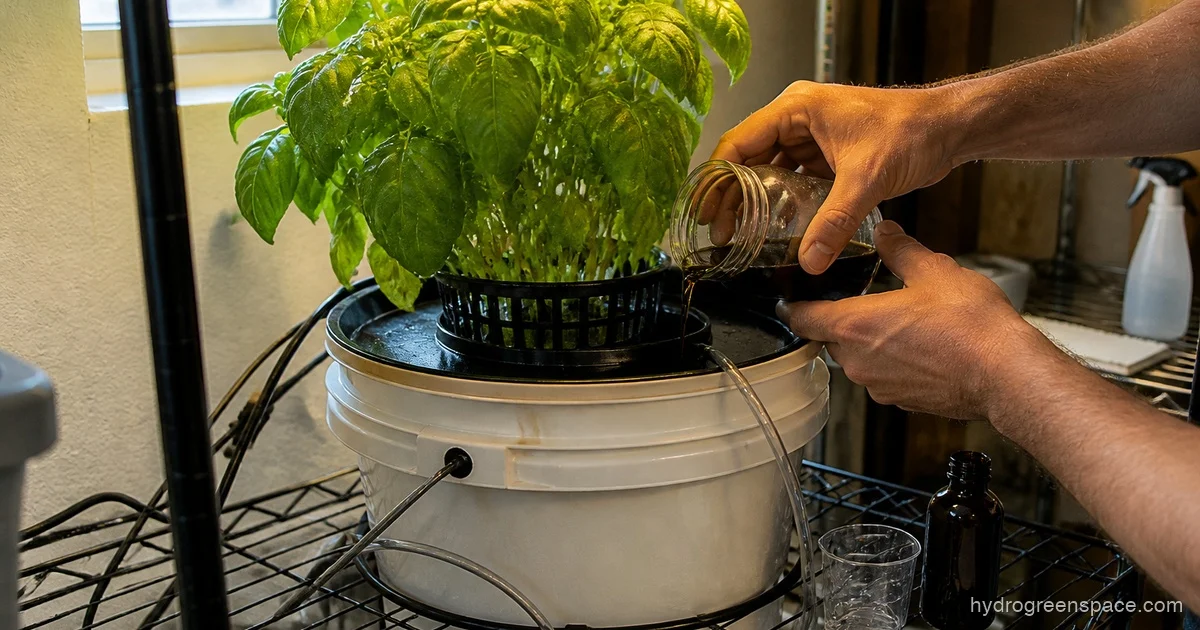
Compost tea comes up constantly in organic hydroponic circles, and the enthusiasm is real. But when growers actually ask “what is my compost tea giving my plants?” they usually get vague answers about beneficial microbes and “natural goodness.” What they don’t get is NPK numbers, EC equivalents, or any honest comparison to a synthetic nutrient solution. This article fixes that.
The short version: compost tea is a useful supplement, not a standalone nutrient source. Here’s the longer version, with actual numbers.
What Nutrients Compost Tea Actually Contains
Compost tea does contain plant-available nitrogen, phosphorus, and potassium, but the amounts are frustratingly inconsistent. The NPK depends entirely on what went into the compost, how mature it was, and how long you brewed it.
A typical actively aerated compost tea (AACT) brewed from finished compost runs somewhere between 0.1-0.5% nitrogen, 0.05-0.2% phosphorus, and 0.1-0.3% potassium by volume. Compare that to a standard hydroponic nutrient solution running 150-200 ppm nitrogen, and you can see the gap immediately. When diluted to a working solution (the 1 cup per gallon starting point I’ll get to shortly), compost tea contributes roughly 5-20 ppm of nitrogen at best.
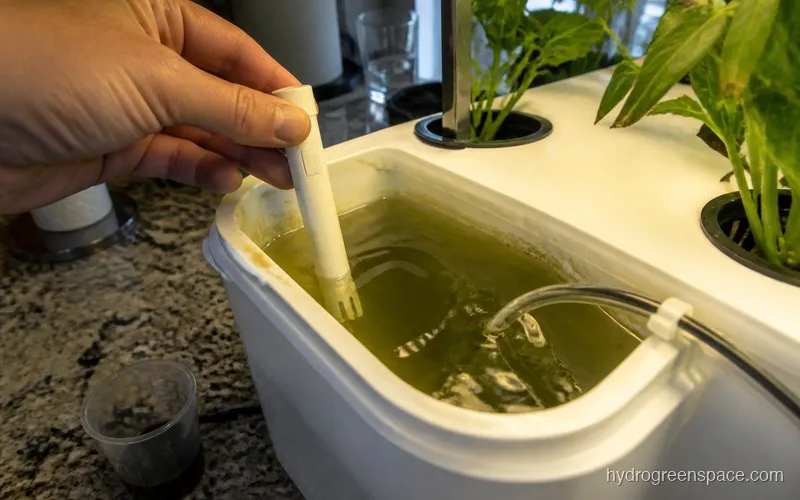
To put it another way: a complete nutrient mix like General Hydroponics Flora Series at recommended dosing brings your reservoir to an EC of 1.5-2.5 mS/cm. A full compost tea application at 1 cup per gallon? Expect EC to rise by 0.05-0.2 mS/cm. If you’re not testing EC before and after adding compost tea, you’re flying blind on your nutrient levels.
The nutrient content also shifts based on your source material:
- Worm castings: Higher nitrogen (closer to 1% in the solids), calcium, and magnesium. Worm casting tea tends to be the most nutrient-dense option for hydroponics.
- Finished veggie/leaf compost: Moderate N with better microbial diversity
- Manure-based compost: Higher N and P, but pathogen risk unless the compost is well-aged
One thing compost tea does well: it delivers micronutrients like iron, manganese, and zinc in chelated, plant-available forms. If you want to understand micronutrients in hydroponics in more depth, that’s a topic worth studying once you’ve got your macro dosing dialed.
Compost Tea vs. Synthetic Hydroponic Nutrients
Research comparing organic nutrient inputs (including compost-based sources) to synthetic hydroponic nutrients consistently shows yield reductions in the 15-25% range when growers try to run purely organic. A study from Washington State University found a roughly 20% yield reduction in organic vs. conventional hydroponic lettuce production. That number doesn’t mean organic hydroponics is a waste of time, but it does mean something real is being sacrificed.
The reasons aren’t mysterious. Synthetic nutrients deliver immediately bioavailable ions. Nitrogen as ammonium nitrate or potassium nitrate is absorbed directly. Compost tea nutrients, even when fully dissolved, depend on microbial activity to complete nitrogen cycling and make forms like organic nitrogen plant-available. In a soilless system without a resident microbial community in a growing medium, that conversion process is slow and unreliable.
What compost tea wins at is supporting root health and microbial diversity in systems that have some growing medium. If you’re running rockwool, coco, or perlite, the inoculation benefits are real. Beneficial bacteria colonize the root zone and can outcompete pathogens like Pythium. In a pure DWC system with bare roots floating in solution, those microbes have nowhere to live, so the benefit is more limited. I have a full rundown on using beneficial bacteria in hydroponics if you want to go deeper on that side of things.
Worm Casting Tea vs. Standard Compost Tea
For hydroponics specifically, worm casting tea is the better choice between the two.
Worm castings have been processed twice, once by the organic matter breaking down and once through a worm’s digestive system. The result is a more consistent, finer-particle material with higher concentrations of humic acids, plant growth hormones (specifically cytokinins and auxins in trace amounts), and water-soluble nitrogen. When you brew a tea from worm castings, you’re extracting a more predictable nutrient profile than you get from field compost.
The practical difference: worm casting tea runs slightly higher in nitrogen and calcium, typically pushing EC by 0.1-0.3 mS/cm per cup per gallon. It’s also less likely to carry pathogens. Standard compost tea from yard waste or manure composts carries more variability and pathogen risk if the source material wasn’t properly heat-treated.
For a deep dive on brewing and straining methods safely, see how to brew and strain compost tea before adding anything to your reservoir. This article focuses on the nutrient side, not the brewing mechanics, and you don’t want to introduce unfiltered particulate into your system.
Using Compost Tea as a Supplement, Not a Replacement
The right mental model is: compost tea is a microbial inoculant and micronutrient supplement that happens to carry some macronutrients along for the ride. Run your standard base nutrients, then add compost tea on top.
Dosing framework:
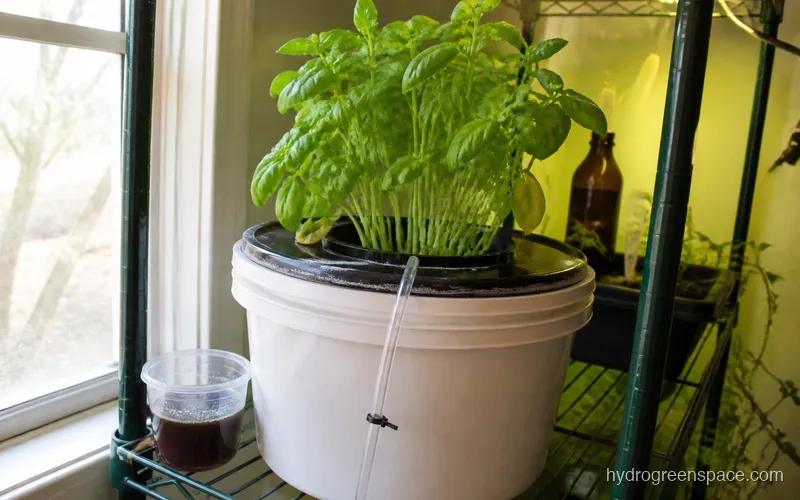
Start with 1 cup (240ml) per gallon of reservoir volume and test your EC before and after. Write both numbers down. That before/after delta is your compost tea’s actual contribution to your nutrient load. Over a few batches, you’ll get a reliable sense of what your specific tea does to EC and can adjust your base nutrient mix accordingly.
Common starting points:
- Small systems (5-10 gallon reservoir): 1-2 cups per reservoir change
- Medium systems (20-30 gallons): 2-4 cups total
- Larger systems (50+ gallons): 4-6 cups, added with reservoir changes
Don’t exceed 15-20% of your reservoir volume in compost tea. Past that point, you’re introducing so much organic matter that you’re actively creating conditions for bacterial blooms and oxygen depletion, which is the last thing you want in a reservoir. This is one of the faster paths to nutrient lockout from pH swings caused by microbial activity.
If you want to explore making your own nutrient inputs beyond compost tea, making hydroponic nutrients from raw compost and DIY hydroponic nutrient solutions at home cover those approaches.
What Growth Stage Benefits Most
Not all growth stages benefit equally. Here’s where compost tea earns its keep:
Transplant and early vegetative stage: This is the highest-value window. Adding compost tea when you first transplant seedlings inoculates the root zone with beneficial microorganisms before pathogens have a chance to establish. The microbial community that colonizes young roots early often stays there through the cycle. A single application at transplant can meaningfully reduce root rot incidence in media-based systems.
Mid-cycle vegetative: A secondary application 2-3 weeks into growth can reinforce the microbial community and deliver the organic micronutrient boost. Humic acids in worm casting tea specifically help with iron and calcium uptake, which is useful as plants ramp up growth and demand increases.
Late flowering/fruiting: The least impactful window. Plants under heavy nutrient load don’t need more microbial inoculation, and the risk of introducing organic matter near harvest is higher than the benefit. Skip the compost tea in the last 2-3 weeks before harvest.
Tip: If you’re running a short-cycle crop like lettuce or herbs (30-45 days), a single transplant application is often enough. Save multiple applications for longer fruiting crops like tomatoes or cucumbers.
How Compost Tea Affects pH
Compost tea typically has a pH between 6.5-7.5 when freshly brewed, which is slightly high for most hydroponic systems (target range is 5.5-6.5 for most crops). When added to a reservoir, it tends to nudge pH up by 0.2-0.5 units depending on your water’s buffering capacity.
This isn’t a disaster, but it’s not nothing either. Always check pH after adding compost tea and adjust down if needed. In soft water systems with low buffering, the pH shift can be more dramatic. If you’re already dealing with pH fluctuation in your reservoir, adding an organic input is going to compound that challenge.
The microbial activity that continues after you add the tea to your reservoir can also drive pH changes over the following 24-48 hours as bacteria metabolize organic matter and release carbon dioxide. Check pH again the next day, not just immediately after adding.
The Organic Certification Question
If your goal is running a genuinely organic operation, compost tea fits into that picture, but it doesn’t solve the fundamental challenge. The question of whether hydroponics can be fully organic is more complicated than most people realize, and nutrient sourcing is only part of it. Compost tea gets you closer to an organic nutrient profile, but if you’re chasing certification, you’ll need to verify that every input meets your certifier’s standards.
For growers who just want cleaner inputs without full certification, a hybrid approach works well: run an organic-approved base nutrient like General Organics CaMg+ or MaxiGro alongside periodic compost tea supplementation. You get consistent macro delivery plus the microbial and micronutrient benefits from the tea. If you want to know more about feeding your plants properly as a whole, how to feed hydroponic plants covers the full nutrient management picture.
The biggest thing holding compost tea back as a standalone nutrient source is consistency. You can’t reliably know what NPK you’re delivering without lab testing every batch, and that defeats the simplicity growers are usually chasing. Once you’ve got your compost tea supplement dialed in, the next step is understanding NPK ratios at a deeper level so you can see exactly where compost tea fits in your full nutrient schedule. The hydroponic nutrients guide covers how compost tea fits alongside synthetic and organic nutrient approaches, and when each one makes sense for your system.