General Hydroponics vs Fox Farm: Which Trio Wins?
If you’ve spent more than ten minutes shopping for hydroponic nutrients, you’ve already run into these two brands. General Hydroponics and Fox Farm are everywhere, and half the forums you’ll find are arguing about which one is better. Most of those arguments are framed around cannabis. If you’re growing lettuce, basil, tomatoes, or peppers, the comparison looks completely different, and that’s exactly what this article covers.
Both brands sell a “trio” of three bottles. Both work. But they’re not the same thing, and the wrong choice for your system will cost you time, money, and pH frustration. Here’s what you actually need to know.
| Nutrient Line | Best For | System Type | Cost/Gallon |
|---|---|---|---|
| GH Flora Trio | Vegetables, herbs, beginners | DWC, Kratky, NFT | $0.06–$0.10 |
| Fox Farm Trio | Media-based growing, soil crossover | Coco, LECA, drip | $0.09–$0.15 |
What Each Trio Actually Contains
Before comparing performance, it helps to understand what you’re actually buying with each line.
The General Hydroponics Flora Trio
The GH Flora Trio is three bottles: Flora Micro, Flora Gro, and Flora Bloom. This is a fully chelated, mineral-based nutrient system that was designed from the ground up for hydroponics. Flora Micro contains the calcium, iron, and micronutrients. Flora Gro drives vegetative growth with nitrogen and potassium. Flora Bloom shifts the balance toward phosphorus and potassium during fruiting and flowering.
Because each bottle handles a different piece of the nutrient profile, you can adjust the ratio between them depending on what your plants need. GH even publishes a “simple” feed schedule (equal parts of each) and an aggressive schedule for heavy feeders. For a deeper look at how to dial in those ratios, the General Hydroponics PPM chart shows exactly what EC and PPM to target at each growth stage.
The Fox Farm Trio
Fox Farm’s trio is Big Bloom, Grow Big, and Tiger Bloom. This is where the comparison gets more interesting. Fox Farm built its reputation in soil. Big Bloom is an organic-based product made from earthworm castings and bat guano. Grow Big is a liquid concentrate for vegetative growth. Tiger Bloom pushes phosphorus and potassium during bloom.
Here’s the thing most growers don’t realize: the Fox Farm trio was designed for soil, not for hydroponics. Fox Farm actually sells a separate hydro-specific line called the Hydro Trio (Hydro Grow, Hydro Bloom, and Microbe Brew). If you’re running a DWC or Kratky system and someone recommends Fox Farm, ask them which product line they mean. Using the soil trio in pure water culture is workable but creates extra challenges, especially with pH.
The pH Difference Nobody Talks About
This is the single biggest practical difference between these two lines in a hydroponic reservoir.
General Hydroponics nutrients are pH buffered. When you mix the Flora Trio into water at the recommended dose, the resulting solution lands pretty close to the target range (5.8 to 6.2) without much correction needed. You’ll still check and adjust, but the adjustment is usually small.
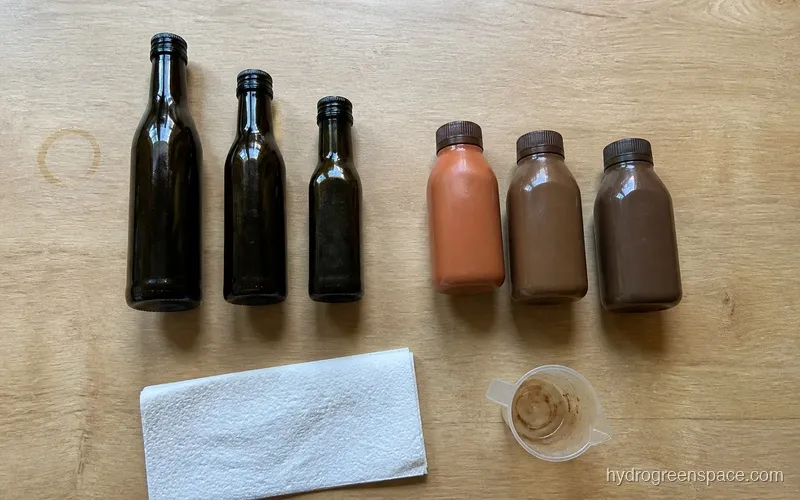
Fox Farm nutrients, particularly the soil trio, are much more acidic when mixed. The organic components in Big Bloom and the formulation of Grow Big push your reservoir pH down significantly. In my experience, you’ll use roughly 25% more pH Up to hit your target range compared to a GH-mixed reservoir. That’s not a dealbreaker, but it matters when you’re topping off a reservoir every few days and rebalancing each time.
→Check price on GH pH Up & pH Down ComboThe 1qt combo covers both adjustments, useful to have on hand regardless of which nutrient line you run.Warning: If you’re using the Fox Farm soil trio in DWC and your plants look stunted or bleached in the first week, check your pH before anything else. It’s very easy for the reservoir to drift low and lock out calcium and iron, which looks exactly like a deficiency.
For reference on what target ranges to hit at each stage, the hydroponic EC chart covers EC targets from seedling through harvest for common vegetables.
CalMag: Do You Need It With Either Line?
Calcium and magnesium are the nutrients hydroponic growers run short on most often, especially in systems using reverse osmosis water or soft tap water.
With the General Hydroponics Flora Trio, calcium is built into Flora Micro. If you’re using the full three-part system at the recommended ratios, you generally won’t need a separate CalMag supplement for most vegetables. If you’re in a fast-cycling system like NFT or a high-transpiration crop like tomatoes in summer heat, some growers add a small CalMag dose as insurance. But it’s not a default requirement.
With Fox Farm, particularly the soil trio, calcium and magnesium are less reliably available in a hydro reservoir. Big Bloom adds some trace minerals, but the calcium level isn’t designed with recirculating water culture in mind. Most experienced growers using Fox Farm in hydro add CalMag as a standard part of their routine, not an optional one. Factor that into your cost calculation.
→Check price on GH CALiMAGicA quart goes a long way at typical hydro doses, commonly paired with Fox Farm to fill the calcium and magnesium gap.Cost Per Gallon of Reservoir (Real Numbers)
Sticker price doesn’t tell you much. What matters is how much nutrient solution you’re actually spending per gallon of reservoir. These numbers are approximate and based on common retail pricing, but the ratios hold.
| General Hydroponics Flora Trio | Fox Farm Soil Trio | |
|---|---|---|
| Typical price per quart (each bottle) | $12-$15 | $15-$20 |
| Dose per gallon at half-strength | ~3 ml each bottle | ~3-5 ml each bottle |
| Estimated cost per gallon of mixed reservoir | $0.06-$0.10 | $0.09-$0.15 |
| CalMag typically required? | No (occasional) | Yes (standard) |
| pH Down required (relative) | Baseline | ~25% more |
General Hydroponics comes out cheaper per gallon of mixed solution, and that gap widens once you account for the CalMag you don’t need to buy separately. Over a full grow season, especially if you’re running a larger system with a 20+ gallon reservoir, the difference adds up.
If cost is your primary concern, it’s also worth looking at options like Masterblend hydroponic nutrients or cheap hydroponic nutrient options, which can bring cost-per-gallon down even further.
Which Works Better in DWC and Kratky vs. Media-Based Systems?
System type matters here.
DWC and Kratky: General Hydroponics is the better fit. The Flora Trio was designed for recirculating water culture. It mixes clean, buffers well, and doesn’t leave sediment. The Flora Micro/Gro/Bloom ratios are well-documented for reservoir systems, and the three-part format gives you flexibility to shift the nitrogen-to-phosphorus balance without buying additional products. For Kratky specifically, where you set your reservoir and mostly leave it, you want a stable, well-buffered solution, and GH delivers that.
Fox Farm’s soil trio in DWC is doable but messier. Big Bloom contains organic matter that can cloud your reservoir and contribute to algae growth or root zone issues over time. If you’re committed to Fox Farm in a water culture system, their Hydro Trio is a much cleaner option and the one designed for this purpose.
Drip and media-based systems (coco, LECA, perlite): Fox Farm is more competitive here. In a media-based system, organic components from Big Bloom interact with the growing medium and microbial life in ways that can benefit the plant. The pH buffering issue is also less acute when you’re watering and draining rather than recirculating. If you’re running a drip system with coco coir or growing in LECA with a hydroponic fertilizer, Fox Farm’s soil trio is a more natural fit.
Fox Farm Trio (Big Bloom / Grow Big / Tiger Bloom)
A three-bottle organic-based nutrient system built for soil and media-based growing, with strong results in coco and LECA drip setups.
Best for: Coco coir, LECA, perlite drip systems; growers who use Fox Farm across soil and hydro
Check price on AmazonAdd CalMag as a standard supplement when using this line in any hydroponic setup.
Feeding Schedule Complexity for Beginners
If you’re brand new to hydroponics, feeding schedule complexity matters. Overcomplicating your nutrients in the first grow is one of the fastest paths to nutrient burn and confusion.
The GH Flora Trio has what they call the “Lucas Formula,” a two-bottle shortcut (just Micro and Bloom, skipping Gro) that many beginners use to simplify things. It’s not the only approach, but having a well-known beginner shortcut with clear ratios is genuinely useful. Their full three-part schedule is also widely documented for vegetable growers, not just cannabis.
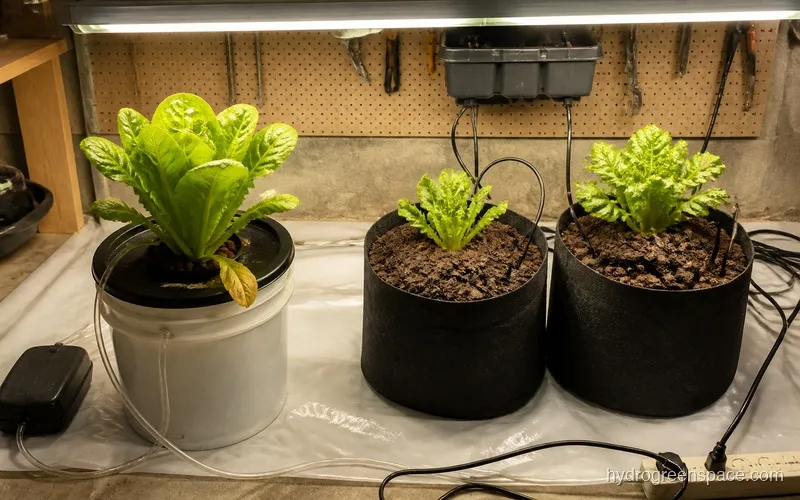
Fox Farm’s feeding schedule involves more products if you follow their official chart, which includes additional supplements beyond the trio. The base trio alone is manageable, but their recommended schedule adds six or seven products. For a beginner growing lettuce in a 5-gallon bucket, that’s overwhelming and unnecessary. Stick to the three bottles only and ignore the rest of the chart until you’re comfortable with basic reservoir management.
For a full walkthrough of mixing and measuring nutrients in your reservoir, how to feed hydroponic plants covers the mechanics from scratch.
What I’d do: For my first hydroponic grow with vegetables, I’d start with the GH Flora Trio at half the recommended dose. Mix Micro first, then Gro, then Bloom. Check pH, adjust once, and leave it. You can always add complexity in grow two. Keep it simple and learn what healthy plants look like before you start tweaking ratios.
The Verdict: Which One Should You Choose?
For most vegetable and herb growers in hydroponic systems, General Hydroponics is the better starting point. It was built for water culture, it buffers pH predictably, it doesn’t require a separate CalMag purchase, and it costs less per gallon of mixed solution. The feeding schedule is simpler to understand, and there’s a massive amount of documentation specifically for non-cannabis crops.
Fox Farm earns its place in media-based systems like coco or LECA, and particularly if you’re already familiar with their soil products and want to keep the same brand across your garden.
Neither brand will fail you if you use it correctly. But if you’re standing in a hydro shop deciding between the two for a DWC bucket of tomatoes, grab the General Hydroponics Flora Trio. You’ll spend less time fighting pH and more time watching your plants grow.
General Hydroponics Flora Series 3-Part Kit
The original three-part mineral nutrient system designed for hydroponics, with built-in pH buffering and flexible ratios for every growth stage.
Best for: DWC, Kratky, NFT, and any water culture system; vegetables, herbs, and beginners
Check price on AmazonMix Micro first, then Gro, then Bloom. Always follow that order to avoid nutrient lock-out.
Once you’ve got nutrients dialed in, the next variable worth understanding is how NPK ratios shift between growth stages. The NPK ratios for leafy greens article goes deeper on what your nitrogen-to-phosphorus balance should look like for different crops, and it’ll help you make better sense of when to lean on Gro versus Bloom as your plants develop. For a broader comparison of all the major nutrient brands and approaches, the hydroponic nutrients guide covers the full decision from liquid versus powder to organic versus synthetic.