
Advanced Nutrients Review: Does pH Perfect Work?
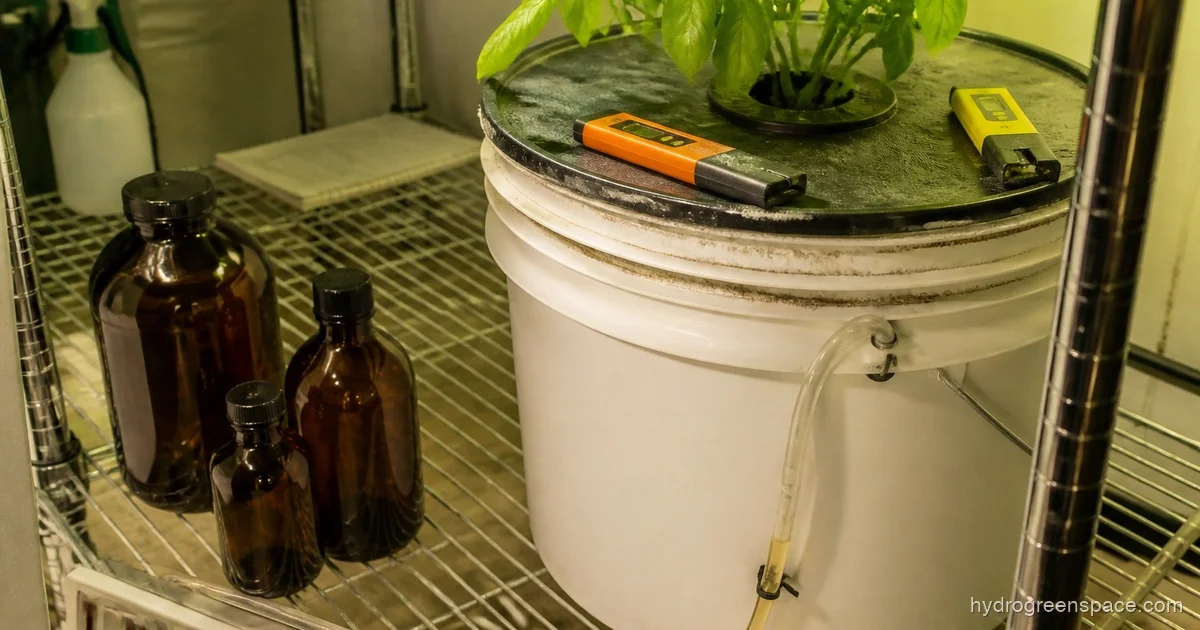
Advanced Nutrients gets loud endorsements and loud criticism in equal measure. If you’ve spent any time on hydroponic forums, you’ve seen it: growers swearing it transformed their garden, and growers swearing you can get the same results from General Hydroponics for half the price. Both camps are partially right, which is exactly why this review exists.
I’ve run Advanced Nutrients Sensi Grow and Bloom through a full DWC cycle, tested Grow Micro Bloom as a 3-part alternative, and paid close attention to what pH Perfect technology actually does (and doesn’t do) in different water conditions. Here’s what I found.
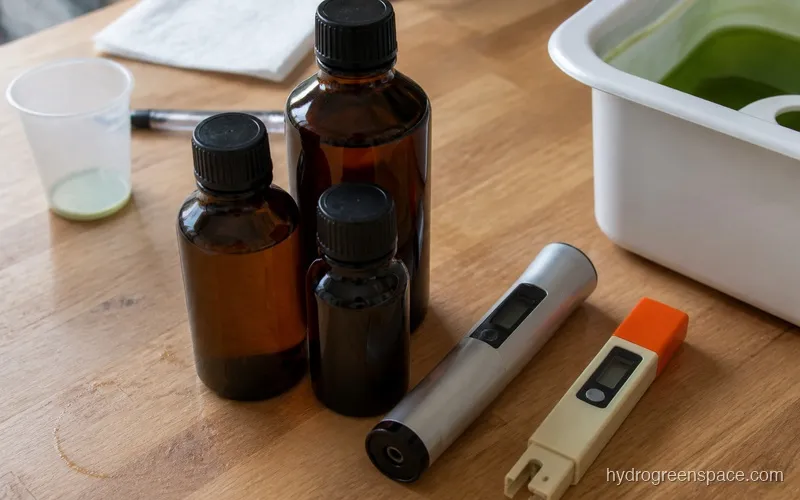
| System | Best For | Type | Price |
|---|---|---|---|
| Sensi Grow A+B + Bloom A+B | RO water growers, beginners | 2-part | $$$ |
| Grow Micro Bloom Bundle | Growers who like ratio control | 3-part | $$$ |
What’s in the Advanced Nutrients Lineup
Advanced Nutrients sells a lot of products, and their catalog is intentionally overwhelming. For most growers, the decision comes down to two base systems:
Sensi Grow A+B / Sensi Bloom A+B (2-part): The flagship. Mix equal parts A and B in your reservoir. pH Perfect technology is built in. Higher price per liter, simpler mixing.
pH Perfect Grow, Micro, Bloom (3-part): Their answer to GH Flora Series. Three-bottle system, more control over nutrient ratios at each growth stage. Still includes pH Perfect technology.
Both include their pH buffering technology, which is the centerpiece of every Advanced Nutrients pitch. You also have the full roster of additives (Voodoo Juice, Big Bud, Overdrive, B-52), which the company pushes hard. I’m not going to review the additives here because they’re not where most growers should start. Get the base dialed in first.
Does pH Perfect Technology Actually Work?
This is the question every grower asks before buying, and the honest answer is: yes, within specific conditions.
pH Perfect is a chelation and buffering technology. It uses specific pH-buffering agents and chelated nutrients to keep your solution in the 5.5–6.3 range automatically. In practice, it reduces pH drift in the reservoir and reduces (not eliminates) how often you need to manually adjust.
The catch, and it’s a real one, is that it works best with water that’s already reasonably stable. With reverse osmosis (RO) water or soft tap water (under 150 ppm), pH Perfect performs well. The solution stabilizes in the target range within a few hours, and many growers go 3–4 days between pH checks instead of checking daily.
With hard tap water (above 300 ppm, high carbonate hardness), the buffering agents struggle against the existing mineral load. Your solution may still drift, and you’ll still need to adjust. Advanced Nutrients will tell you their technology works with tap water, and technically it does, but the harder your water, the less hands-off it actually is.
→Check price on Aquatic Life RO FilterWhat I’d do: If you’re on hard tap water, either invest in an RO filter or test your pH every other day regardless of what the label says. Manually adjusting pH when pH Perfect technology falls short is still a skill worth having, no matter which nutrient line you use.
If you’re running RO water, this technology genuinely saves time. If you’re running hard tap water, the savings are much smaller than the marketing suggests.
The Sensi Grow and Bloom Review (2-Part System)
Sensi Grow A+B and Sensi Bloom A+B are the products most commonly reviewed under the Advanced Nutrients name, and they perform well. Plants respond visibly. Foliage is dense, internode spacing is tight in veg, and bloom progression is consistent.
The NPK ratios are competent and the chelation means micronutrients stay available across a wider pH window than unchelated alternatives. In my DWC runs, I saw no signs of lockout even when pH occasionally crept toward 6.5. That stability is real and not something every nutrient line delivers.
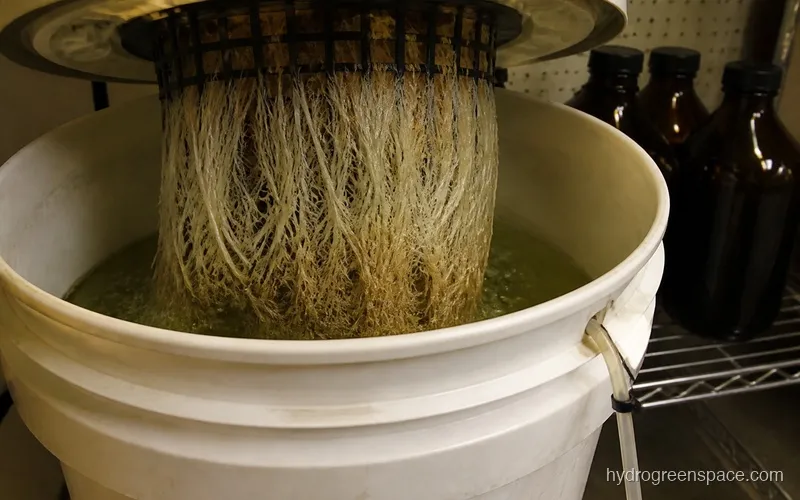
The feeding schedule is straightforward for a 2-part: equal volumes of A and B, start at 2 ml/L in early veg and work up to 4 ml/L in peak bloom. The company provides a full chart online. You’ll want to cross-reference your EC targets for each growth stage rather than relying on ml/L alone, because water chemistry affects how concentrated your solution actually is.
One thing I’ll flag: at manufacturer-recommended doses, EC levels can run high. I start at about 70% of the recommended dose and adjust up from there. Starting full-strength is a fast way to cause nutrient burn in hydroponics.
Grow, Micro, Bloom vs. Sensi: Which One Should You Choose?
The 3-part Grow Micro Bloom system gives you more flexibility in dialing in the nitrogen-to-phosphorus ratio across growth stages. In veg, you lean on Grow and Micro. As you transition to bloom, you shift the ratio toward Bloom. If you’ve used GH Flora Series, the logic is identical.
The advantage over Sensi A+B is granular control. The disadvantage is that it takes more attention. For most home growers running a single grow tent, Sensi A+B is simpler and produces equivalent results. For growers who want to experiment with custom ratios or who are scaling up, the 3-part gives you more room to work.
Neither system requires additives to produce healthy plants. The additive line exists to potentially improve yield and quality, but it’s not necessary for baseline success.
Advanced Nutrients Grow Micro Bloom Bundle
3-part system with pH Perfect buffering, mirrors the GH Flora Series structure for growers who prefer stage-by-stage ratio control.
Best for: Experienced growers switching from GH, ratio-control preference
Check price on AmazonAdvanced Nutrients vs. General Hydroponics: The Real Trade-Off
You’ll find this comparison everywhere, and the forum consensus is roughly accurate: General Hydroponics Flora Series can get you 85–90% of the results at about 40–50% of the cost. For a head-to-head breakdown, see how Advanced Nutrients stacks up against General Hydroponics and Fox Farm.
Advanced Nutrients earns its premium in two specific ways:
- pH stability with RO water. GH does not include pH buffering technology. If you’re spending time adjusting pH daily, the convenience premium of Advanced Nutrients has real value.
- Chelation breadth. Advanced Nutrients uses a wider array of chelated micronutrients, which means less risk of lockout when pH wanders slightly. GH relies more on your pH discipline.
Where Advanced Nutrients does not earn its premium: if you’re an experienced grower who already monitors pH closely, tracks EC daily, and adjusts proactively, GH or even Masterblend as a simpler, lower-cost alternative can match Advanced Nutrients’ output at significantly lower cost.
The honest answer to “is Advanced Nutrients worth it” is: it depends on how much time you want to spend on reservoir management, and whether you’re running RO water.
Is Advanced Nutrients Good for Beginners?
This is where Advanced Nutrients’ pitch is at its most compelling and its most misleading.
The pitch: pH Perfect means you don’t have to worry about pH. Just mix and grow. For a beginner, that sounds like a gift.
The reality: pH Perfect reduces drift, it doesn’t eliminate the need to understand pH. If you start using Advanced Nutrients without understanding what EC means, what nutrient lockout caused by pH drift looks like, or how to read your plants, you’ll still run into problems. You just might not know what caused them.
A better framing for beginners: Advanced Nutrients is a premium line that gives you a little more safety margin than entry-level nutrients. It is not a substitute for understanding your system. Even with pH Perfect, you should own a pH meter you’ll still want even with Advanced Nutrients and check your reservoir at least every 48 hours.
→Check price on Apera PH20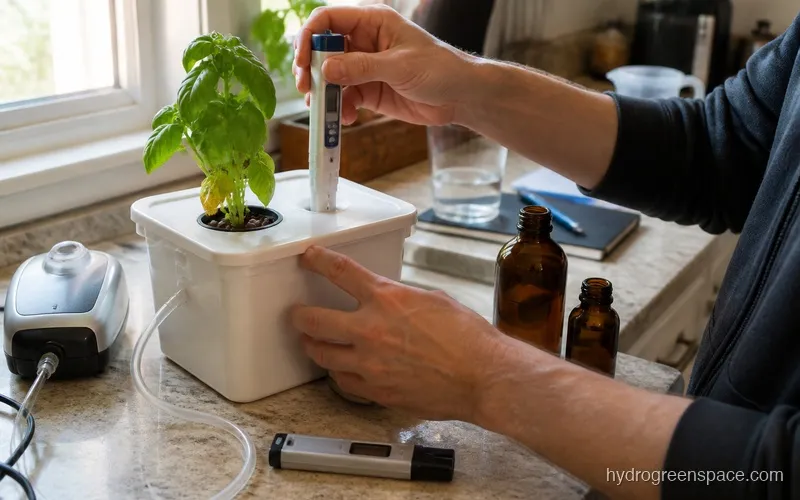
If you’re just starting out, the Advanced Nutrients Sensi Grow A+B and Sensi Bloom A+B are genuinely user-friendly. Two bottles per phase, mix equal parts, done. Compare that to running a 3-part system like GH where you’re mixing three separate bottles per reservoir fill.
For autoflowers specifically, the feeding schedule is gentler (start at 1–2 ml/L and max out around 3 ml/L) and the pH buffering matters more because autos are sensitive to any kind of stress. You can compare your approach to a General Hydroponics feeding schedule for autoflowers to see where AN sits relative to another popular brand.
What the Feeding Schedule Actually Looks Like
Advanced Nutrients publishes a week-by-week schedule on their website, and it’s more detailed than most brands. A simplified version for Sensi Grow A+B / Sensi Bloom A+B:
| Stage | Sensi A (ml/L) | Sensi B (ml/L) | Target EC |
|---|---|---|---|
| Early veg | 2 | 2 | 1.0–1.4 |
| Mid veg | 3 | 3 | 1.4–1.8 |
| Late veg | 4 | 4 | 1.8–2.2 |
| Early bloom | 4 | 4 | 1.8–2.4 |
| Peak bloom | 4 | 4 | 2.0–2.6 |
| Late bloom | 2–3 | 2–3 | 1.4–1.8 |
| Flush | 0 | 0 | RO water only |
Always verify PPM and EC directly. For tracking your PPM at each growth stage, a consistent testing habit matters more than any feeding chart.
→Check price on Apera EC60Tip: Change your reservoir water every 7–10 days in recirculating systems regardless of nutrient line. Stale reservoirs accumulate organic buildup and are the real source of most pH instability, not a bad nutrient formula.
The Additive Pressure Problem
It’s worth naming something directly: Advanced Nutrients has built a business model around upselling additives. If you visit their website or read their feeding schedule PDF, you’ll see a full product stack including Voodoo Juice, B-52, Bud Candy, Big Bud, Overdrive, and more. Running all of them would cost more per grow than the base nutrients themselves.
Some of these additives have real research behind them. Mycorrhizal inoculants (like what Voodoo Juice claims to support) do benefit young root systems. Carbohydrate additives are more contested.
My recommendation: run the base nutrients for at least two full cycles before adding anything. Diagnose your baseline results. Only then consider additives, and add one at a time so you can actually measure the impact.
Who Should Buy Advanced Nutrients
Buy it if:
- You’re running RO water and want less daily pH maintenance
- You’re willing to pay a premium for a polished, well-formulated product
- You’re a beginner who wants a simple 2-part system (Sensi A+B)
Skip it if:
- You’re on hard tap water without an RO filter (the pH benefits shrink substantially)
- You’re budget-conscious and comfortable with pH management
- You’re already running GH Flora with solid results
Advanced Nutrients Sensi Grow A+B + Bloom A+B 4L Set
The flagship 2-part pH Perfect system covering veg through bloom. pH stabilizes automatically with RO or soft tap water.
Best for: RO water users, DWC, beginners who want less pH work
Check price on AmazonThe rest of the top hydroponic nutrient brands for vegetables covers alternatives worth comparing, and if cost is the deciding factor, making your own nutrient solution from scratch is a real option for growers who want maximum control at minimum cost. For a complete overview of every nutrient category and where Advanced Nutrients sits in the broader landscape, the hydroponic nutrients guide covers the full range from budget salts to pH-perfect premium systems.
If you decide Advanced Nutrients is the right fit, start with Sensi Grow A+B and Sensi Bloom A+B. Give pH Perfect at least one full cycle to show you what it can do in your specific water conditions before drawing any conclusions about whether the premium is earning its keep.