
Masterblend Hydroponic Nutrients: Complete Mixing Guide
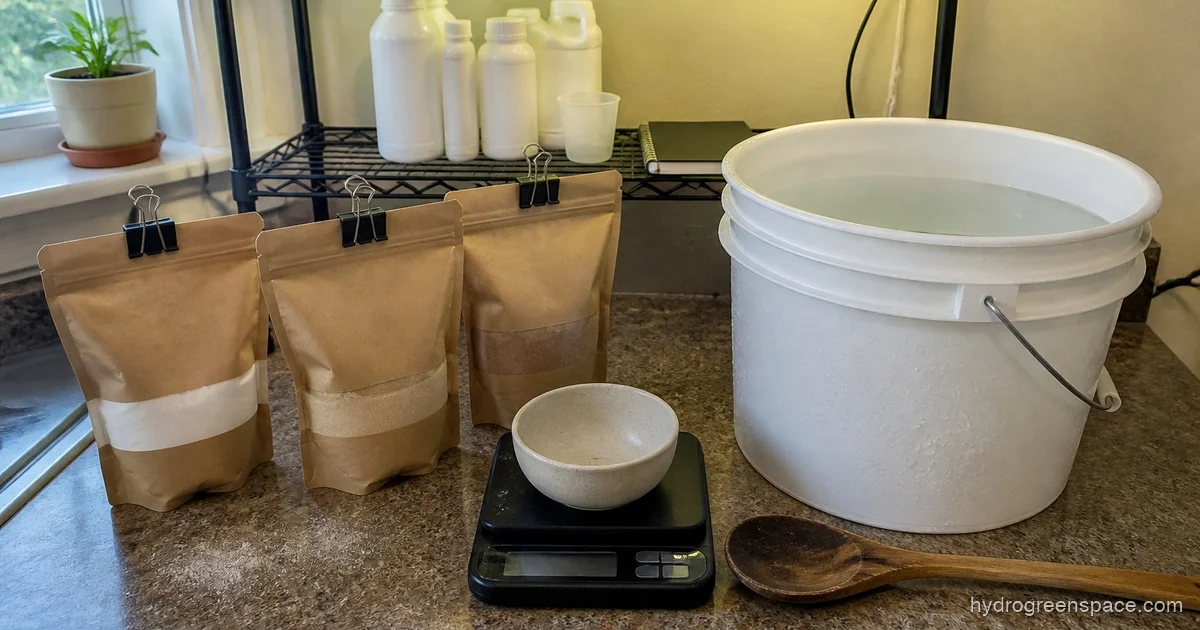
Masterblend built its reputation the quiet way: growers figured out it worked, told other growers, and now it’s become one of the most-recommended budget hydroponic nutrient options online, not because of marketing, but because a bag of it goes a long way and the results hold up. If you’ve heard about the “3-part Masterblend recipe” and wondered whether it’s actually worth switching from a name-brand bottle system, this article breaks down everything you need to know before mixing your first batch.
For context on how Masterblend compares against other options, best hydroponic nutrients for vegetables covers the full field.
One caveat upfront: Masterblend is a professional tomato fertilizer that growers adapted for home hydroponics. It wasn’t designed for a Kratky jar on your windowsill, but it works in one. That’s both its appeal and the reason you need to understand what you’re actually mixing before you start.
What You’ll Need
Three components and a couple of pieces of equipment cover everything in this guide:
- Masterblend 4-18-38 (the base formula): →combo kit with all three components
- Calcium nitrate (included in the combo kit above)
- Epsom salt (magnesium sulfate) (included in the combo kit above)
- Digital gram scale (accurate to 0.1g): →Grow1 hydroponic gram scale
- pH and EC meters (for checking solution balance before plants go in)
What Is Masterblend and Why Growers Love It
Masterblend 4-18-38 is a water-soluble, complete fertilizer that was originally developed for professional greenhouse tomato production. The “4-18-38” refers to its NPK ratio: 4% nitrogen, 18% phosphorus, 38% potassium. On its own, it’s incomplete for hydroponics because it lacks calcium and sufficient magnesium. That’s why you always use it as part of a three-component system.
The full recipe uses:
- Masterblend 4-18-38 (the base formula)
- Calcium nitrate (adds calcium and a nitrogen boost)
- Magnesium sulfate / Epsom salt (fills the magnesium gap)
Together, these three components create a complete nutrient solution with a balanced NPK ratio for leafy greens and all necessary secondary nutrients. The formula has chelated micronutrients already built into the Masterblend bag, which means iron, manganese, zinc, copper, and boron are present in forms your plants can actually absorb.
The appeal for home growers is straightforward: one purchase covers hundreds of gallons of nutrient solution. A 25-pound bag of Masterblend runs around $45–55, and when you do the math against single-use bottles of General Hydroponics or FoxFarm, the cost difference becomes significant fast.
Masterblend 4-18-38 Complete Combo Kit (2.5 lb)
All three components pre-portioned together: Masterblend 4-18-38, calcium nitrate, and Epsom salt in the correct 2:2:1 ratio. The simplest way to start without buying three separate bags.
Best for: Lettuce, tomatoes, herbs, any hydroponic or Kratky setup
Check price on AmazonThe 2.5 lb kit makes roughly 100–150 gallons of nutrient solution. For larger setups, see the 25 lb bag below.
Exactly How to Mix Masterblend (Step-by-Step)
Mixing order matters here, and getting it wrong causes precipitation that looks like white cloudy chunks floating in your reservoir.
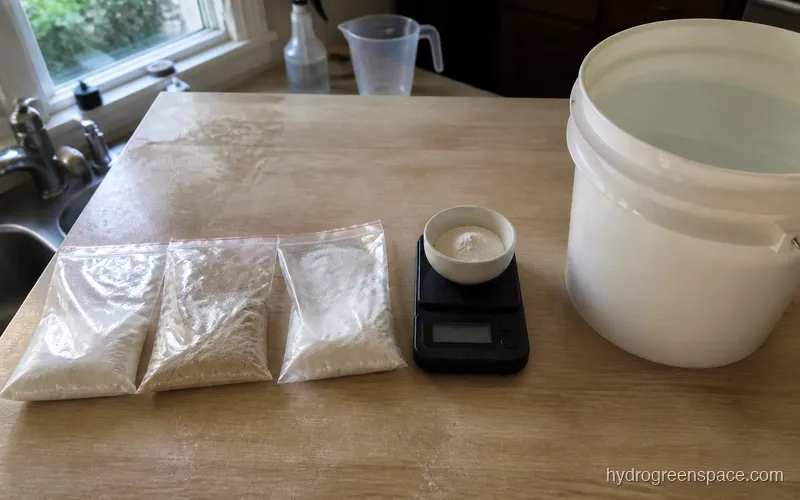
The base ratio for 5 gallons of water:
- 12g Masterblend 4-18-38
- 12g calcium nitrate
- 6g Epsom salt (magnesium sulfate)
This creates a solution of approximately 800–900 PPM, which works well for most established vegetable crops. Adjust up or down based on your crop and growth stage.
Grow1 Digital Gram Scale (0.1g accuracy)
A hydroponic-specific gram scale with a removable weighing tray, accurate to 0.1g. Precise enough for small Kratky batches where every gram shifts your PPM.
Best for: Measuring Masterblend, calcium nitrate, and Epsom salt for any batch size
Check price on AmazonKitchen scales that max out at 1g increments are not accurate enough for single-gallon mixes.
Step-by-step mixing process:
- Start with your full volume of water (room temperature is ideal)
- Dissolve the calcium nitrate first, stir until completely clear
- Add the Masterblend 4-18-38, stir until dissolved
- Add the Epsom salt last, stir until dissolved
- Check your pH and adjust to 5.5–6.2 depending on your crop
Watch Out
Never mix calcium nitrate and Masterblend together as dry powders before adding to water. Calcium reacts with phosphate and sulfate in the Masterblend formula and will form insoluble precipitates. Always dissolve calcium nitrate in water first, then add Masterblend.
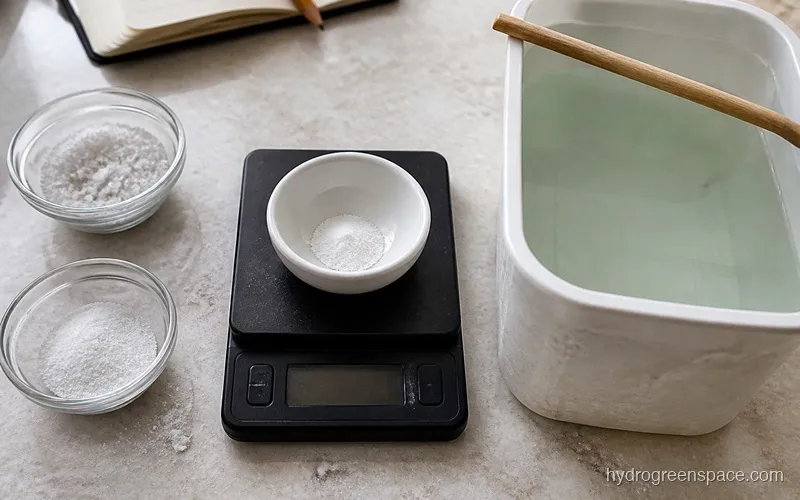
The ratio of Masterblend to calcium nitrate is always 1:1 by weight. Epsom salt is always half the Masterblend weight. For smaller batches, scale proportionally: for 1 gallon, use 2.4g Masterblend, 2.4g calcium nitrate, and 1.2g Epsom salt.
Plant-Specific PPM Targets
The base ratio gives you a starting point, but your plants have different needs depending on species and growth stage. Here’s what works based on experience:
Lettuce and Leafy Greens
Lettuce is the lightest feeder you’ll grow hydroponically. Start seedlings at 400–500 PPM and work up to 600–800 PPM at peak growth. Running lettuce above 900 PPM tends to cause tip burn, especially in warmer conditions. Cut the base recipe roughly in half for seedlings (6g Masterblend, 6g calcium nitrate, 3g Epsom salt per 5 gallons).
For Kratky lettuce specifically, mix once and let the plant take what it needs. You don’t need to top off with plain water as frequently as you would with tomatoes because lettuce grows faster relative to what it consumes.
Tomatoes
Tomatoes are what Masterblend was designed for. Use the full base recipe (800–900 PPM) during vegetative growth and push to 1,000–1,200 PPM once flowering starts. Fruiting plants in DWC or drip systems can handle up to 1,400 PPM at peak production, though you’ll want to monitor for nutrient stress if EC climbs above 3.0. If you’re running tomatoes year-round, the →25 lb bulk bagMakes 1,500–2,000 gallons at the standard recipe and drops cost to under $0.05 per gallon. makes the most economic sense at scale.
Peppers and Herbs
Peppers run similar to tomatoes: start around 800 PPM, push to 1,000–1,200 PPM once flowering. Herbs like basil and cilantro fall closer to lettuce on the spectrum, 600–800 PPM works well. Basil in particular will tell you quickly if it’s getting too much: leaves curl slightly inward and the color shifts toward dark waxy green.
| Crop | Seedling PPM | Vegetative PPM | Fruiting/Peak PPM |
|---|---|---|---|
| Lettuce / leafy greens | 400–500 | 600–800 | 700–900 |
| Tomatoes | 500–700 | 800–1,000 | 1,000–1,400 |
| Peppers | 500–700 | 800–1,000 | 1,000–1,200 |
| Herbs (basil, cilantro) | 400–500 | 600–800 | 700–850 |
For a detailed reference by growth stage, the general hydroponics PPM chart gives you comparable targets you can use as a crosscheck even when running Masterblend.
Apera EC60 PPM/EC Meter
A waterproof combo meter that reads both EC and PPM with a replaceable probe. Accurate enough to catch the subtle shifts that signal when plants are drinking water faster than nutrients.
Best for: DWC, recirculating systems, Kratky top-off decisions
Check price on AmazonCalibration solution included. The replaceable probe extends the life of the meter significantly over sealed units.
Which Hydroponic Systems Work Best with Masterblend
Masterblend is not system-specific. It dissolves completely in water and stays stable, so it works in any recirculating or passive system. That said, some setups suit it better than others.
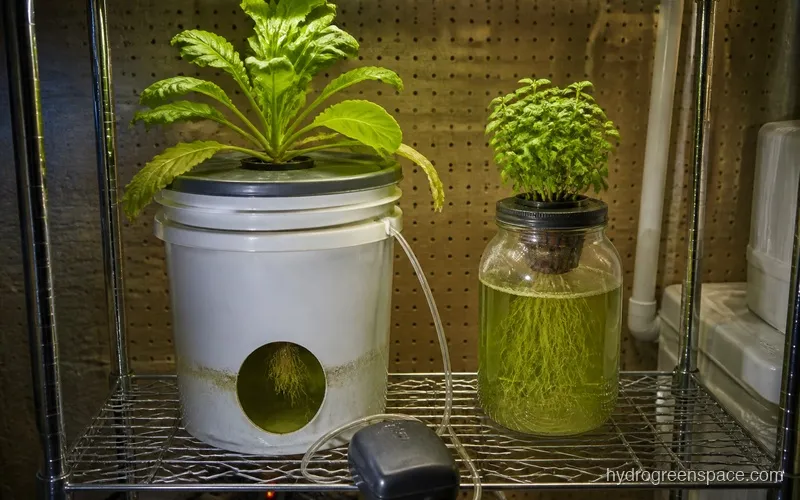
Kratky: Works extremely well. Mix once, set your reservoir, and let it ride. Kratky’s passive nature pairs well with Masterblend’s stability because there’s no pump pushing the solution through filters or complex delivery mechanisms. Just watch your PPM as the reservoir drops, since the concentration rises as plants drink water faster than they pull nutrients.
DWC (Deep Water Culture): This is where Masterblend shines for fruiting crops. The constant oxygenation in a DWC setup keeps nutrients available and the simple formula is easy to track. Check EC every 2–3 days; top off with plain pH-adjusted water when PPM is climbing (plants are drinking water faster than nutrients), or with fresh mixed solution when PPM is dropping.
NFT (Nutrient Film Technique): Masterblend handles NFT fine. The consistent thin-film delivery means the nutrient solution cycles continuously, which can amplify any pH drift. Monitor pH daily in NFT systems.
Drip systems: No issues here either. If you’re running a drip system with a 5-gallon bucket setup, Masterblend is a cost-effective choice given how much solution you’ll cycle through.
The Honest Cost Breakdown vs. Name-Brand Systems
This is what actually draws most growers to Masterblend. Let’s look at a real cost-per-gallon comparison.
General Hydroponics Flora Series (3-part): A starter kit runs $30–40 and makes roughly 100–150 gallons depending on dosage. That works out to about $0.20–0.30 per gallon.
FoxFarm Trio: Similar story, roughly $0.25–0.35 per gallon at standard recommended doses.
Masterblend 3-part system: A 25lb bag of Masterblend (the usual purchase size) plus matching quantities of calcium nitrate and Epsom salt totals around $70–90 for the complete trio. That quantity makes roughly 1,500–2,000 gallons at the standard 5-gallon recipe. You’re looking at $0.04–0.06 per gallon.
That’s not a slight edge. That’s 4–6x cheaper. And you’re not sacrificing quality to get there: Masterblend is a professional-grade formula used in commercial greenhouses, not a hobbyist product scaled down. For a full side-by-side on how these popular systems stack up, general hydroponics vs FoxFarm has the detailed breakdown.
Pro Tip
Buy the Masterblend combo kit (all three components together) when starting out. The individual component ratios are balanced by weight, and buying the kit ensures you don’t run out of one component before the others.
Troubleshooting: What Goes Wrong and Why
White Cloudiness in Your Reservoir
This is almost always a mixing order problem. If you add Masterblend and calcium nitrate together before fully dissolving one in water first, calcium phosphate precipitates out. It looks like white chalk floating in the water. The nutrients are partially unavailable at that point. Dump the batch, rinse the reservoir, and start over with the correct sequence.
Nutrient Lockout
Lockout happens when pH is out of range and your plant’s roots can no longer absorb specific nutrients even though they’re present in solution. Masterblend’s micronutrients become unavailable quickly if pH climbs above 6.5 in a hydroponic system. Nutrient lockout shows up as deficiency symptoms despite a full reservoir, typically iron first (yellowing between leaf veins on new growth).
Keep pH between 5.5–6.2 for most crops. Lettuce tolerates 5.8–6.5 slightly better than tomatoes, which prefer 5.8–6.2.
Rising PPM Over Time
In a recirculating system, if your plants are drinking water faster than they’re consuming nutrients, PPM will climb. This is the plant telling you it’s hot or the nutrients are slightly too concentrated. Top off with plain pH-adjusted water (not fresh mixed solution) when PPM rises more than 10–15% above your target. Use an EC chart to convert between EC and PPM if your meter reads in different units.
Yellowing Lower Leaves
This usually signals nitrogen running low late in the reservoir’s life cycle. In a recirculating system, do a full reservoir change every 7–10 days rather than topping off indefinitely. In Kratky, if yellowing appears before the plant reaches harvest size, you mixed too low a concentration or the plant has been in the jar too long without a top-off.
Pro Tip
If you’re seeing yellowing and you’re certain the mix is right, check your water source. Hard tap water often has calcium and magnesium already present, which throws off the balance in the Masterblend formula. Reverse osmosis water or rainwater gives you a clean starting point.
Masterblend vs. General Hydroponics: Which Should You Buy?
Masterblend wins on cost, period. If you’re growing at any scale beyond a single jar, the savings add up fast and the formula is proven.
Where General Hydroponics has an edge is in flexibility. The Flora Series lets you adjust NPK ratios by changing the ratio of three bottles, which is useful for dialing in specific crops or growth stages. Masterblend’s formula is fixed. You can change concentration but not the nutrient ratio itself.
For most home growers growing lettuce, tomatoes, or herbs, Masterblend’s fixed formula is fine. The base 4-18-38 profile was designed for vegetable production and it performs across those crops without modification. If you want detailed feeding schedules for hydroponic plants, the same principles apply regardless of which nutrient system you’re using.
If you’re growing a wide range of specialty crops or doing complex experiments with nutrient cycling, the three-part flexibility of GH might justify the higher cost. For everyone else, Masterblend is the better value.
Once You Start Using It, You Won’t Go Back
The reason Masterblend keeps growing in popularity isn’t mystery. It’s a professional formula, it’s dramatically cheaper than bottled systems, and it works across the most common crops home growers actually grow. Once you’ve got the mixing sequence down and you’ve dialed in your PPM targets per crop, you’ll find yourself ordering in larger quantities because it just makes sense.
If you’re curious how building your own nutrient solution from scratch compares to buying a pre-blended system, mixing your own hydroponic nutrients at home takes that idea even further. But for most growers, Masterblend is the sweet spot: you’re not formulating from raw salts, but you’re paying close to what commercial growers pay per gallon.
Mix your first 5-gallon batch, take notes on your PPM before and after a week, and let what the plants show you drive the next adjustment. The formula handles the rest. For a broader comparison of how Masterblend stacks up against other nutrient approaches, the hydroponic nutrients guide covers the full landscape from powders to premium liquid systems.