
Hydroponic Nutrients: The Complete Grower's Guide
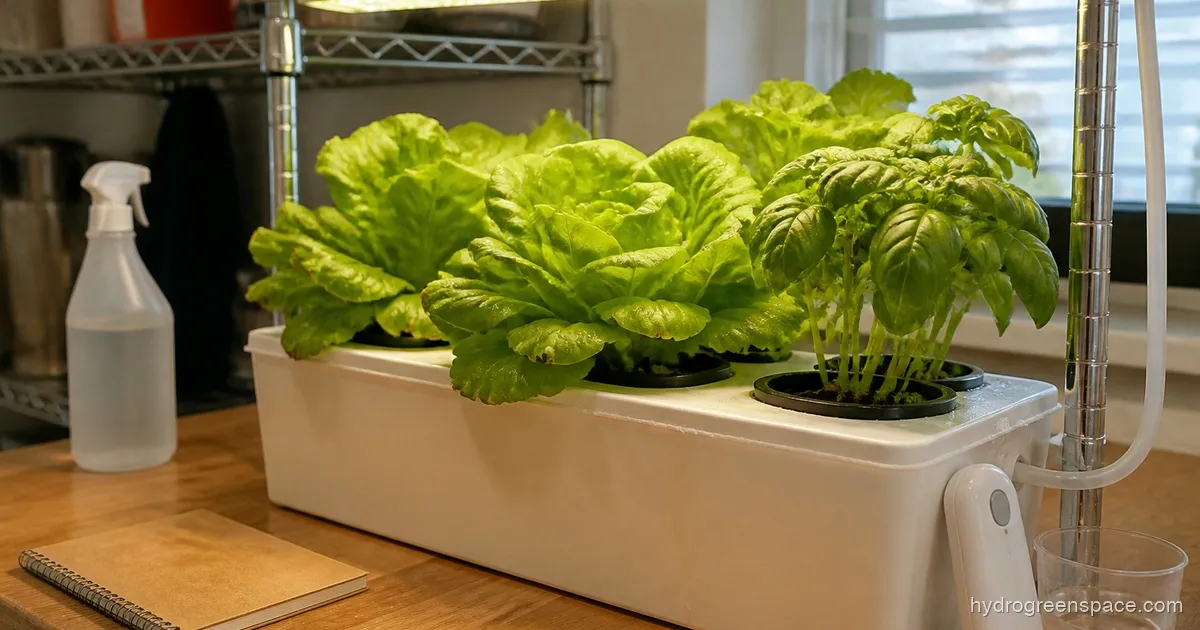
Soil feeds plants passively. Hydroponics puts that entire job on you. Every nitrogen atom, every calcium ion, every trace of iron or manganese your plant needs has to come from the water you pour into the system. If it’s not there, or not in the right ratio, or blocked by the wrong pH, your plants tell you within days.
That’s what makes hydroponic nutrients both the most important thing to understand and, honestly, one of the most satisfying to get right. Once you’ve dialed in a nutrient solution and watched plants respond (faster growth, deeper green, roots that fill a net pot in a week), you stop seeing nutrients as a chore and start seeing them as the actual levers you’re pulling.
This guide covers the full picture: what your plants need at the chemistry level, how to mix and manage a solution, which nutrient lines work (and which are overhyped), how to go DIY, when organic options make sense, and how to read EC, PPM, and NPK numbers without needing a chemistry degree. Each section links to a dedicated deep-dive for growers who want the full detail on that topic.
How to Feed Hydroponic Plants: EC, pH and Timing
Feeding hydroponic plants comes down to three numbers you need to understand: EC (electrical conductivity), pH, and PPM (parts per million). EC and PPM tell you how much nutrient is dissolved in your water. pH tells you whether your plants can actually absorb any of it. Get one wrong and the other two don’t matter.
Most beginners learn this the hard way: they mix a perfect solution, check EC, feel good, then wonder why their lettuce is yellowing. The answer is almost always pH. At 7.0 or above, iron and manganese lock out. At 5.0 or below, calcium and magnesium become unavailable. The sweet spot for most hydroponic crops is pH 5.5–6.5, with 5.8–6.2 being the target for leafy greens and herbs.
The other question beginners ask is how often to add nutrients. The honest answer is: top off with plain water when levels drop, do a full reservoir change every 7–14 days depending on crop size and system volume. A small Kratky jar with one lettuce needs a top-off. A 20-gallon DWC system running tomatoes needs a scheduled weekly reset.
For the full guide, see How to Feed Hydroponic Plants
Best Hydroponic Nutrients for Vegetables
Picking the right nutrient line isn’t about finding the magic formula. It’s about matching the format and complexity to how you actually grow. A 3-part liquid system from General Hydroponics gives you flexibility to dial in ratios by growth stage, but if you just want to mix once and grow lettuce, a simple one-part powder dissolved in water gets the job done without the confusion.
The biggest practical split is liquid vs. powder. Liquids are convenient and pre-measured. Powders (like Masterblend or Jack’s 321) cost a fraction per gallon and work just as well. The only time liquids make more sense is if you’re mixing small batches and precision measuring powders feels fussy.
What nutrients do hydroponic plants need? At the macro level: nitrogen (N), phosphorus (P), potassium (K), calcium, magnesium, and sulfur. At the micro level: iron, manganese, zinc, copper, boron, and molybdenum. A quality hydroponic nutrient solution covers all of these. Soil fertilizers typically don’t, which is why you can’t just dump Miracle-Gro in a reservoir and call it done.
For the full guide, see Best Hydroponic Nutrients for Vegetables
Best Hydroponic Fertilizer for Vegetables: Brand Guide
General Hydroponics Flora Series and Fox Farm Trio are the two most talked-about liquid systems for home growers. Both work. The real difference is in pH stability (GH is more forgiving), cost per gallon (Fox Farm gets expensive fast), and system compatibility. Fox Farm’s trio was designed for soil and coco, and running it in a recirculating DWC system will have you fighting pH drift more than you should.
Masterblend and Advanced Nutrients sit on opposite ends of the spectrum. Masterblend is a commercial greenhouse formula with no marketing budget and a loyal following built on word-of-mouth. Advanced Nutrients spends heavily on branding and sells a product ecosystem that can spiral into dozens of expensive additives. For most home growers, Masterblend or Jack’s 321 outperform systems that cost twice as much per gallon.
For the full guide, see Best Hydroponic Fertilizer for Vegetables
Cheap Hydroponic Nutrients: Best Value Per Gallon
The cheapest nutrient to buy is rarely the cheapest to use. A $15 bottle of liquid nutrient that makes 20 gallons at working strength costs $0.75 per gallon. A $20 bag of Jack’s 321 that makes 200 gallons costs $0.10 per gallon. That gap adds up fast.
Cost per gallon at your working dose is the only number that matters when comparing nutrient lines. Powder nutrients win this comparison almost every time. The trade-off is a small amount of precision in measuring (you need a kitchen scale accurate to 0.1g), but that’s a one-time $15 investment that pays back in the first month.
Is it cheaper to make your own nutrients? Yes, if you’re comfortable sourcing raw fertilizer salts like calcium nitrate and monopotassium phosphate separately. The savings are real, but the complexity is higher. You need to understand what each salt contributes to your final solution.
For the full guide, see Cheap Hydroponic Nutrients
DIY Hydroponic Nutrient Solution: Mix Your Own at Home
Making your own nutrient solution at home is more achievable than it sounds. The most accessible starting point is the Masterblend 4-18-38 recipe: Masterblend at 2.4g/gallon, calcium nitrate at 2.4g/gallon, and Epsom salt (magnesium sulfate) at 1.2g/gallon. That three-part salt combination gives you a complete nutrient profile for most crops at a cost that’s hard to beat.
The critical thing to understand is why you add calcium nitrate and Masterblend separately, not pre-mixed. Calcium reacts with phosphate and sulfate in concentrated form to form precipitates. Mix them in solution at working dilution and the problem disappears, but you have to add them to your water in the right order.
What pH should hydroponic nutrients be? After mixing, adjust to 5.8–6.2 for most vegetables and herbs. A digital pH pen is non-negotiable here. Litmus strips aren’t accurate enough for hydroponic work.
For the full guide, see DIY Hydroponic Nutrient Solution
DIY Hydroponic Nutrients From Compost
Compost is rich in organic matter, beneficial biology, and slowly available nutrients. That makes it well-suited for soil and poorly suited for hydroponics in its raw form. Hydroponic systems need nutrients in dissolved ionic form that roots can absorb directly. Organic matter doesn’t work that way. It needs microbial activity to break down and release nutrients, and that microbial activity belongs in a medium, not floating in a recirculating reservoir.
That said, compost-derived solutions can work as supplements in certain systems, particularly media-based setups with growing media that supports a stable microbial population. The key is knowing what you’re actually adding and managing EC and pH accordingly.
For the full guide, see DIY Hydroponic Nutrients From Compost
Compost Tea for Hydroponics: Brew, Apply and Avoid Clogs
Compost tea is exactly what it sounds like: water that’s been aerated with compost to extract soluble nutrients and microbial life. It’s used in organically-oriented grow operations to inoculate root zones with beneficial bacteria and fungi, and as a mild nutrient supplement.
The biggest mistake with compost tea in hydroponics is running it through a recirculating system without straining it properly. Organic particulates clog pump impellers, drip emitters, and irrigation lines fast. In a DWC or NFT system, the residue creates a biofilm that can turn anaerobic and trigger root rot.
The practical application for most home growers is as a foliar spray or a root drench in media-based systems, not as a reservoir additive in deep water culture.
For the full guide, see Compost Tea for Hydroponics
Compost Tea Hydroponic Nutrients: What You Actually Get
If you’re using compost tea expecting it to replace synthetic nutrients, you need to see the actual numbers first. Typical aerated compost tea runs 0.01–0.05% NPK in solution, which translates to an EC of 0.1 to 0.3 mS/cm at most. Most crops need 1.5–3.0 mS/cm to grow well. That’s an order of magnitude gap.
Compost tea is a biological supplement, not a complete nutrient source. What it actually delivers is microbial diversity, humic acids, and small amounts of chelated micronutrients. Worm casting tea is somewhat more nutrient-dense than standard compost tea, but still not a standalone solution for fast-growing hydroponic crops.
For the full guide, see Compost Tea Hydroponic Nutrients
NPK Ratio for Leafy Greens in Hydroponics Explained
For leafy greens like lettuce, spinach, and kale, you want a nitrogen-forward ratio, roughly 3:1:2 or higher N relative to P. High phosphorus in the vegetative phase pushes root development at the expense of leaf growth, which is the opposite of what you want when you’re farming leaves.
For the full guide, see NPK Ratio for Leafy Greens in Hydroponics
Hydroponic Fertilizer for LECA: What Actually Works
LECA (lightweight expanded clay aggregate) is an inert growing medium that provides no nutrition at all and holds very little solution between watering cycles. That means the nutrient requirements in LECA are actually higher than in media like coco or rockwool, which buffer and retain some solution. Every feeding event needs to deliver the full nutrient profile because nothing is being stored between cycles.
Regular houseplant fertilizers fail in LECA because they’re formulated for soil, where microbial activity converts organic compounds into plant-available forms. In LECA with a hydroponic approach, you need fully soluble, inorganic nutrients that roots can absorb directly. Most houseplant fertilizers also skip calcium and magnesium, which need to be supplemented separately in hydroponic setups.
For the full guide, see Hydroponic Fertilizer for LECA
General Hydroponics Autoflower Feeding Schedule (DWC)
The GH Flora Trio was developed for photoperiod cannabis and is one of the most widely used three-part nutrient systems in hobby growing. Running it with autoflowers in DWC requires some adjustments because autoflowers follow an internal clock rather than a light schedule. They shift to flower at 3–4 weeks regardless of what stage your feeding chart says you should be at.
The practical fix is to start transitioning your nutrient ratios toward bloom (lower N, higher P and K) around week 3 or when you see the first preflowers, rather than waiting for the standard transition weeks on the GH chart. Running a vegetative-heavy nutrient formula through early flower is the most common mistake growers make, and it shows up as dark green, clawed leaves with slow bud development.
For the full guide, see General Hydroponics Autoflower Feeding Schedule
General Hydroponics PPM Chart for Home Growers
General Hydroponics publishes a feeding chart designed for commercial-scale production. The recommended dosages on that chart will cause nutrient burn in most home setups, especially with autoflowers, seedlings, and small reservoirs where concentration builds quickly.
A safe starting point for home growers is 50–60% of the GH recommended dose, then adjusting up based on how plants respond. Target PPM ranges by stage: seedlings and clones at 200–400 PPM, vegetative growth at 600–900 PPM, and flowering at 900–1,200 PPM (using the 500 scale). If you’re on the 700 scale, multiply those numbers by 1.4.
What is the difference between 500-scale and 700-scale PPM? Both measure the same EC value but convert it to PPM differently. 500-scale (Hanna) uses a factor of 500; 700-scale (Truncheon/Bluelab) uses 700. Always confirm which scale your meter uses before comparing readings with someone else’s chart.
For the full guide, see General Hydroponics PPM Chart for Home Growers
Hydroponic EC Chart: Ranges by Plant and Growth Stage
Electrical conductivity is the measure of how many ions are dissolved in your nutrient solution. Higher EC means more dissolved nutrients, which generally means more available food for your plants. But “more” doesn’t always mean “better.” Lettuce runs well at EC 1.2–2.0. Tomatoes want EC 2.0–4.0. Push lettuce to 3.5 and you’ll get tip burn and bitter leaves.
EC also drifts over time as plants selectively absorb certain nutrients and water evaporates from the reservoir. A rising EC in a system you haven’t topped off usually means plants are drinking water faster than they’re consuming nutrients. A falling EC means the opposite. Both are useful signals.
How do I know when to add nutrients? Monitor EC daily in active systems. If EC drops by more than 0.3 mS/cm from your target, add a small amount of fresh nutrient solution. If EC is rising, top off with plain pH-adjusted water.
For the full guide, see Hydroponic EC Chart
General Hydroponics vs Fox Farm: Which Trio Wins?
This is one of the most searched nutrient comparisons in hobby hydroponics, and the short answer is: it depends on your system type. For recirculating systems like DWC and NFT, the GH Flora Trio is the more compatible choice. It was engineered for hydroponic applications and maintains more predictable pH behavior in water-only systems.
Fox Farm Trio (Grow Big, Big Bloom, Tiger Bloom) was built for soil and coco. It works in hydroponics, but Big Bloom uses organic inputs that can create sediment, promote algae, and require more frequent reservoir cleaning. Cost per gallon is also significantly higher than GH when you factor in realistic usage rates.
For the full guide, see General Hydroponics vs Fox Farm
Masterblend Hydroponic Nutrients: Complete Mixing Guide
Masterblend 4-18-38 is a tomato-formula fertilizer salt originally designed for commercial greenhouse production. Home growers discovered it a few years back and it quietly became one of the most recommended nutrient options in hydroponic communities, primarily because it’s extremely cost-effective and performs as well as name-brand systems that cost five to ten times more per gallon.
The mixing protocol is precise: always add calcium nitrate to your water first and mix fully, then add Masterblend, then Epsom salt. The standard ratio is 2.4g:2.4g:1.2g per gallon for most vegetables at full strength. For leafy greens, many growers drop to 60–70% of that dose and get cleaner, better-tasting harvests than at full strength.
For the full guide, see Masterblend Hydroponic Nutrients
Advanced Nutrients Review: Does pH Perfect Work?
Advanced Nutrients built its brand around pH Perfect technology, promising that their chelation system will maintain your nutrient solution pH at 5.5–6.5 automatically without any manual adjustment. In practice, pH Perfect works reasonably well within certain water chemistry parameters but doesn’t eliminate the need to monitor pH. If your source water is very hard or very soft, or if your reservoir gets large temperature swings, you’ll still need to adjust.
The Sensi Grow/Bloom two-part system is their cleanest product line and genuinely competitive with other quality two-part systems. The issue is the additive ecosystem. Advanced Nutrients aggressively markets boosters, enzymes, and supplements that, for most home growers, add cost without proportional benefit. You can get excellent results with just the base nutrients.
What’s the difference between 1-part and 2-part nutrients? A 1-part nutrient contains everything in one bottle. A 2-part (or 3-part) separates calcium from phosphate and sulfate to prevent precipitation in the concentrated liquid form. At working dilution, both deliver the same nutrition, but 2-part systems give you more flexibility to adjust ratios by growth stage.
For the full guide, see Advanced Nutrients Review
Understanding NPK Ratios for Hydroponic Plants
NPK ratios seem simple until you try to compare two products side by side and realize the labels aren’t telling you what you actually need to know. A 7-4-10 fertilizer doesn’t mean there’s 7% nitrogen in your water. It means 7% by weight in the dry product. What matters is the ionic ratio in solution at your working concentration.
The classic ratio that makes sense for most vegetative crops is roughly 3:1:2 (N:P:K). More nitrogen than phosphorus or potassium because nitrogen drives leaf and stem growth, which is what you want during vegetative development. At bloom, you reduce nitrogen and increase potassium to support flower and fruit development. Most commercial nutrient lines handle this automatically when you follow their feeding schedule. The value of understanding NPK is knowing when to deviate from the standard chart.
For the full guide, see Understanding NPK Ratios for Hydroponic Plants
Micronutrients in Hydroponics: Fix Deficiencies Fast
Iron, manganese, zinc, copper, boron, and molybdenum are present in tiny quantities in your nutrient solution, but their absence shows up fast. The most common micronutrient problem in hydroponics isn’t actually a deficiency in the nutrient solution. It’s a pH that’s locking out elements that are already there. Iron becomes unavailable above pH 6.5. Manganese follows a similar curve. Before you add anything to your reservoir to correct a deficiency, check pH first.
Complete commercial hydroponic nutrients include a micronutrient package. Where growers run into trouble is when they use a fertilizer designed for soil (which assumes microbial activity will make micronutrients available), or when they’ve been growing in the same reservoir for weeks without a full change and micronutrient levels have been selectively depleted.
For the full guide, see Micronutrients in Hydroponics
Nutrient Deficiency Chart for Hydroponics: Fix It Fast
Diagnosing a nutrient deficiency in hydroponics requires knowing one key concept: the difference between mobile and immobile nutrients. Mobile nutrients (nitrogen, phosphorus, potassium, magnesium) can be relocated within the plant from old tissue to new growth. When they’re deficient, symptoms show up on older leaves first. Immobile nutrients (calcium, iron, boron) can’t move, so deficiency shows first in new growth.
That distinction alone rules out half of the wrong diagnoses growers make. If your newest leaves are healthy and yellowing is starting at the bottom, you’re looking at nitrogen, potassium, or magnesium. If new growth is distorted or pale, focus on calcium or iron.
The fix for a nutrient deficiency is almost never “add more nutrients.” It’s usually “check pH, do a reservoir change, then reassess.” Deficiency symptoms from pH lockout look identical to actual deficiencies and are far more common.
For the full guide, see Nutrient Deficiency Chart for Hydroponics
When to Change Hydroponic Nutrients (Full Guide)
How often should you change your hydroponic water? Every 7–14 days is the standard answer, but that’s a starting point, not a rule. A 5-gallon Kratky jar with a single basil plant can run 3–4 weeks between changes. A recirculating DWC system growing four tomato plants in the same reservoir volume needs a change every 7 days or you’ll watch EC drift and pH swings get harder to manage.
The signals that tell you to change now, not next week: EC is climbing despite the reservoir being at the correct level (nutrient ratio has shifted as plants consumed selectively), pH is swinging more than 0.5 points per day, or you can see cloudiness, slime, or unusual color in the solution. Any of those is a flush-and-reset situation regardless of what day of the week it is.
For the full guide, see When to Change Hydroponic Nutrients
The best way to use this guide is as a home base. Each section above gives you the orientation (the why and the what), then the linked article goes deep on the how. If you’re just starting out, the most useful next read is how to mix and manage your first nutrient solution. If you’ve been growing for a while and costs are adding up, the cost-per-gallon comparison will almost certainly change what you buy next.
Nutrients are the one thing in hydroponics you can’t improvise. Get this part right and everything else gets easier.