
Pruning and Training Techniques for Hydroponics
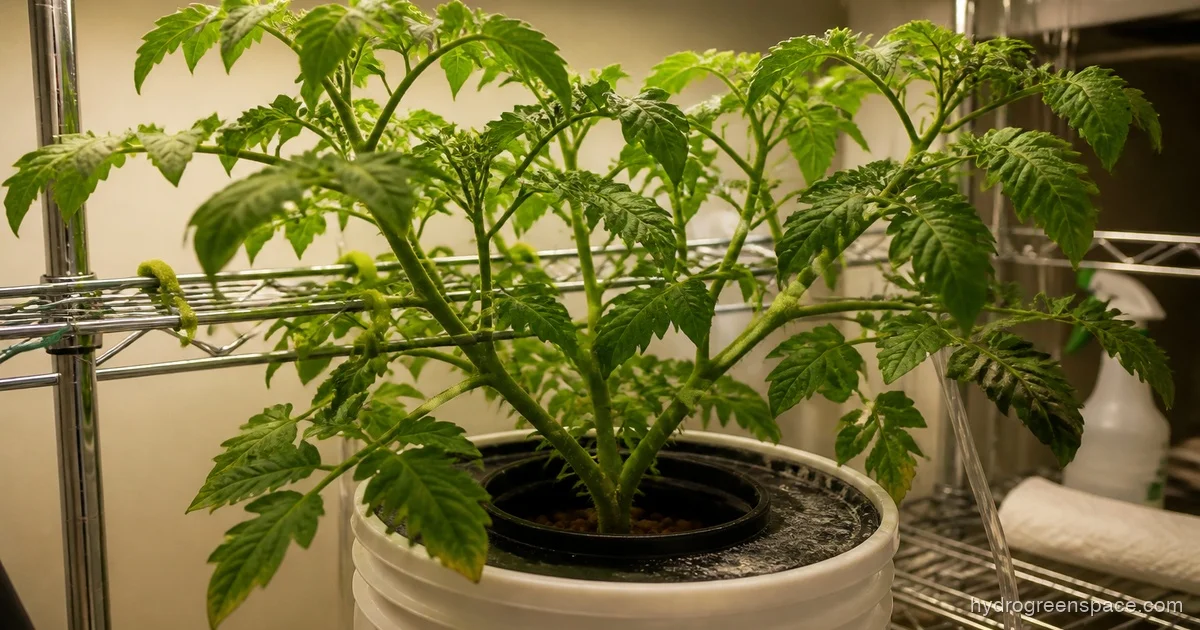
Pruning and training techniques in hydroponics span a wide range, from barely touching your lettuce to building a full SCROG canopy on tomatoes. The right approach depends entirely on what you’re growing. This covers the full spectrum: leafy greens that barely need pruning, herbs that thrive with it, and fruiting plants where smart training can double your yield. You’ll know exactly what to do based on what you’re growing, not just what the technique is called.
Why Pruning Works Differently in Hydroponics
In soil, plants deal with patchy nutrients, variable drainage, and roots competing for space. In hydroponics, nutrients come to the roots on demand. That changes the math on pruning.
Hydroponic plants typically grow 30–50% faster than their soil counterparts. Faster growth means more frequent pruning decisions, more aggressive canopy development, and quicker recovery from cuts. It also means mistakes are amplified: over-prune a hydroponic tomato during peak vegetative growth and it will stall in a way that takes 10–14 days to recover from.
The good news: faster growth also means faster recovery when you prune correctly. A healthy DWC plant can bounce back from a topping in 5–7 days. Soil plants take twice that.
Understanding apical dominance is the foundation here. The growing tip (apex) of a plant produces auxin, a hormone that suppresses lateral branching. When you remove or redirect that tip through training, you break apical dominance and the plant redirects energy into side shoots. That’s the mechanism behind every technique covered below.
Before You Touch a Plant: When Not to Prune
The most useful thing I can tell a beginner is this: the default answer is “not yet.” More plants get stunted from premature pruning than from no pruning at all. If you’ve been seeing slow plant growth in your hydroponic system, over-pruning is one of the first things to rule out.
Do not prune or train in these situations:
- Plants under 2 weeks old (roots still establishing, stress tolerance is low)
- Within 48 hours of a reservoir change or nutrient adjustment
- Plants showing any signs of deficiency, root issues, or disease
- Within 72 hours of transplant or system change
The 48-hour buffer around reservoir changes matters more than most growers realize. When you change nutrients, the plant is already recalibrating its uptake. Add a pruning cut at the same time and you stack two stress events. Space them out.
What I’d do: Schedule pruning on reservoir change day minus two or plus two. Pick one day per week for all maintenance cuts and stick to it. Consistency reduces overall stress more than any single technique.
Leafy Greens: Mostly Hands Off
Lettuce, spinach, kale, arugula, chard. These don’t need training. They don’t have the growth structure that benefits from topping or LST. The “pruning” for leafy greens is really just harvest management.
Outer leaf harvesting is the main technique. Take the oldest, outermost leaves first, always leaving the central growing tip intact. This extends production for weeks on a single plant. Remove no more than 30% of a plant’s leaf mass at once or you’ll crash photosynthesis capacity.
For kale and chard grown in NFT or DWC channels, cutting outer leaves every 5–7 days is actually more productive than a single full harvest. The plant keeps generating yield instead of going all at once.
One exception: bolting. When a lettuce or spinach plant starts bolting (sending up a central flower stalk), pinch that central stalk immediately. It delays bolting by a few days, which is sometimes enough to extend your harvest window. It won’t stop bolting entirely, but it buys time.
Herbs: Pruning for Flavor and Structure
Herbs respond well to pruning, but the goal is different from fruiting plants. You’re not chasing yield or canopy coverage. You’re managing structure and, in most cases, maximizing essential oil concentration.
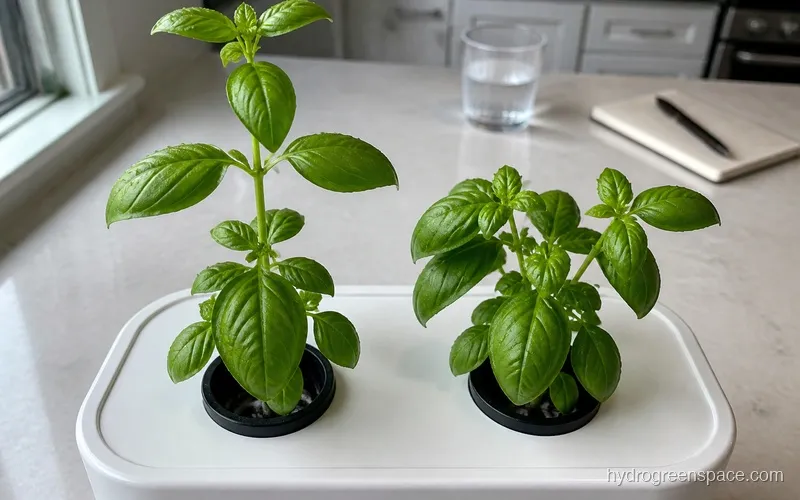
Basil wants to be pinched hard. Once it hits 4–6 true leaves, pinch the growing tip just above a leaf node. This forces two new shoots where there was one. Do this repeatedly and you get a bushy plant instead of a leggy one. In DWC or NFT, basil can become surprisingly large. Keep pinching every time a new branch reaches 4+ nodes.
Remove any flower buds the moment you see them. Flowering triggers a shift in energy toward reproduction, and the leaves get bitter. In a hydroponic system with stable temps, basil can flower earlier than you’d expect. Stay ahead of it.
Mint and oregano are aggressive growers and benefit from cutting back by one-third every few weeks. Left alone, they’ll get woody at the base and the upper growth becomes too shaded to be worth harvesting.
Cilantro is the exception. It bolts fast no matter what you do, and trimming the top usually accelerates the process. Grow it, harvest the outer leaves young, replant frequently rather than training it.
Fruiting Plants: Where Training Pays Off
Tomatoes, cucumbers, peppers, and squash are where pruning and training really earn their place. These are the crops where good canopy management can turn a mediocre yield into a standout one.
Topping
Topping means cutting the main growing tip cleanly, just above a set of leaves. The plant responds by sending energy to the two nodes just below the cut, creating two main stems where there was one. You can top once, or top the resulting branches for four, eight, or more main colas.
Does topping work in hydroponics? Yes, and it works well. The faster growth rate means topping is more disruptive short-term but recovery is quicker. Topping a hydroponic tomato that’s at the 4th–5th node stage works well. Go earlier and the plant doesn’t have enough root mass to recover quickly.
Warning: Topping is a high-stress technique. Never top a plant that’s already showing signs of stress. Never top during the first week in a new system. And never top during flower or fruiting stages. Topping is for vegetative growth only.
LST (Low Stress Training)
LST involves bending stems and securing them horizontally to break apical dominance without cutting. You’re physically redirecting the plant rather than removing any part of it.
In practice: tie down the main stem at a 45–90 degree angle using soft plant ties, bending it away from the center. The nodes along the bent stem each become a new growing tip reaching upward, and suddenly your one-stemmed plant is throwing up multiple leaders. Keep adjusting ties as the plant grows.
LST is beginner-friendly for a reason: it’s reversible, it doesn’t create open wounds, and the plant barely skips a beat. For anyone nervous about high-stress techniques, start here. The difference in light penetration to lower canopy zones is significant, especially under LED panels that have a narrow light footprint.
FIM Technique
FIM (short for “F*** I Missed”) is a partial topping where you pinch out 70–80% of the new growth tip, leaving a small amount behind. Done correctly, the plant responds by creating 3–5 new growing points instead of the 2 you’d get from a clean top.
The tradeoff: FIM is less predictable. The response varies by plant and timing. A clean top always gives you two branches. FIM gives you more, sometimes. For growers who like precision, topping is the better call. FIM is useful if you want to experiment with plant response or if you want to avoid the full stress of a clean top.
Defoliation
Defoliation is the selective removal of fan leaves to improve light penetration and airflow to lower bud or fruit sites. In a dense canopy, large leaves shade out developing fruits and create humid pockets that invite disease.
Should you defoliate in hydroponics? Yes, with restraint. Remove leaves that are blocking direct light to fruiting sites, leaves that are yellowing beyond recovery, and large fan leaves deep in the canopy where they’re contributing nothing to photosynthesis.
The mistake most growers make is removing too many leaves at once. A 20–30% defoliation in a single session is the upper limit for a healthy plant. More than that and you’re removing too much photosynthetic surface area. You’ll see the plant stall for a week or more. For guidance on which leaves signal a problem versus which are doing useful work, the yellowing leaves guide covers exactly that distinction.
SCROG and SOG
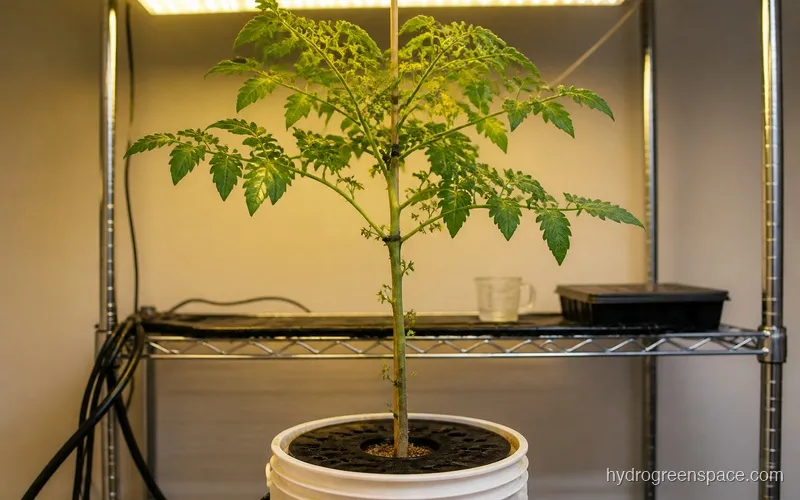
SCROG (Screen of Green) involves weaving plant growth through a horizontal screen installed 30–40cm above the canopy. As stems grow through the screen, you tuck them back under and redirect them horizontally until the screen is evenly filled. Then you let the plant grow up through the screen for the final stretch. SCROG works best for plants you’re growing one or two at a time in a larger reservoir. For a deeper breakdown of how to set this up in a hydroponic system, see the SCROG method guide.
SOG (Sea of Green) is a different approach: grow many smaller plants packed tightly, let them each produce one main cola, and harvest earlier and more frequently. SOG works well in flood-and-drain and NFT systems where you can manage many net pots in a row. There’s less training involved and more system design. More on that approach at the SOG method guide.
These two get confused constantly. SCROG = one or few plants trained wide. SOG = many plants kept small. Your system size and plant count will tell you which fits your setup.
Root Pruning: The Part Everyone Skips
Canopy management gets all the attention, but root management matters just as much in a recirculating system.
In DWC and flood-and-drain, roots naturally grow toward pump outlets and can restrict flow over time. Long, circling roots also develop anaerobic pockets at the center of the root mass (zones with no oxygen) that create conditions similar to root rot, even without a pathogen present.
Root pruning in hydroponics is different from root rot. You’re trimming healthy but overextended roots, not treating diseased ones. The technique: during a reservoir change, pull the plant out carefully, identify any roots that are brown, circling, or matted, and cut them back cleanly with sterile scissors. Leave all white, healthy roots untouched.
A good rule: if roots are hanging more than 2–3 inches below the bottom of the net pot or blocking a pump or air stone, it’s time to trim. Do this every 4–6 weeks in a mature system.
Tip: Sterilize scissors with isopropyl alcohol before root pruning. Always do it during a reservoir change, not mid-cycle. And never remove more than 20% of the root mass at one session.
Matching Technique to Crop Type
Here’s the practical summary by crop type:
| Crop | Recommended Techniques | Avoid |
|---|---|---|
| Lettuce, spinach | Outer leaf harvest, bolting control | Topping, LST, defoliation |
| Basil | Regular pinching, flower removal | Letting it bolt |
| Mint, oregano | Cut-back every 2–3 weeks | Nothing specific |
| Tomatoes | LST, topping, defoliation, SCROG | FIM on young plants |
| Cucumbers | LST, single-stem training | Heavy defoliation |
| Peppers | Light topping early, minimal after | Aggressive defoliation |
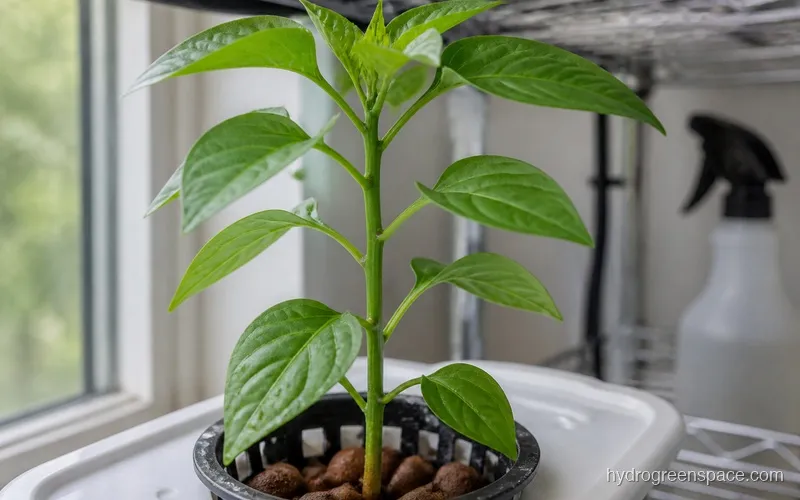
Peppers in particular are often overtrained. One early topping to encourage branching is useful. After that, leave them mostly alone. Heavy defoliation on peppers slows fruit development noticeably.
Timing Pruning Around Your Growth Cycle
Timing your cuts relative to your nutrient schedule matters as much as the technique itself.
The vegetative growth stage is the window for all high-stress techniques. During flowering or fruiting, topping, heavy defoliation, and root pruning are off the table. Light LST adjustments and targeted leaf removal are fine throughout.
If your plants are about to transition from vegetative to flowering, get any planned topping done at least 10 days before you intend to flip. The plant needs that recovery window before it redirects energy to reproduction.
The first 30 days guide covers the vegetative window in detail if you’re newer to reading plant stages. Knowing when your plant is ready for training is as important as knowing the technique itself. And improved airflow from regular pruning pays dividends beyond yield, since better canopy management reduces pest pressure significantly.
If you want to push yield further once you have the pruning basics down, the techniques here integrate naturally with broader strategies covered in the increasing yields guide. Train the plant structure first. Then optimize everything around it. Pruning and training sit at the core of what separates a basic grow from an intentional one, and both are covered in depth in the advanced hydroponic techniques guide.