
Sea of Green Hydroponics: The SOG Method Guide
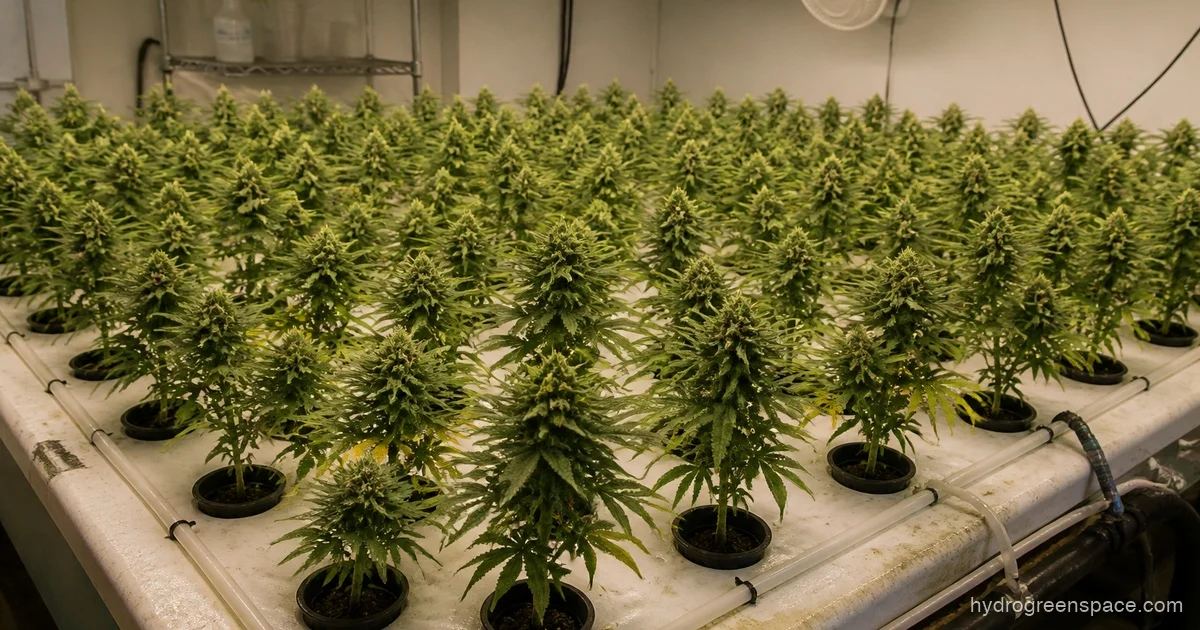
The sea of green method is one of the fastest ways to fill a grow space with flower, and it works even better in hydro than in soil. The reason is simple: hydro plants grow faster, so the 2-week veg window that makes SOG efficient actually holds up. In soil, you’re often stretching that timeline just to get adequate root development. In a well-dialed hydroponic system, you’re filling your canopy and flipping on schedule.
Which Hydroponic System Works Best for SOG?
The short answer is ebb and flow (also called flood and drain) for larger plant counts, and DWC for smaller setups. Here’s why each one fits.
Ebb and Flow for Large SOG Runs
Ebb and flow is the grower’s consensus pick for SOG at scale, and it earns that reputation. You fill a flood table with net pots or small containers, run timed flood cycles, and each plant gets identical nutrient exposure. That uniformity is exactly what SOG needs. If one plant gets ahead of the others, your canopy becomes uneven and you lose the whole point of the technique.
The other reason ebb and flow works so well is logistics. With 16, 20, or even 30 plants in a SOG setup, you don’t want to manage individual reservoirs. One central reservoir feeding a flood table keeps maintenance manageable. You’re checking pH and EC once, not per-plant.
If you’re building out an ebb and flow setup for SOG, use smaller containers (1-2 gallon) to pack your plant density. Bigger pots just eat up table space without giving you a meaningful yield advantage when you’re running one cola per plant.
DWC for Smaller SOG Counts
If you’re running 4-8 plants, a DIY DWC setup works well for SOG. Each plant gets a direct oxygen-rich root environment, which accelerates early veg growth and gets you to the flip faster. The tradeoff is that managing multiple individual buckets becomes tedious past 8 plants. You’re topping off and adjusting pH in each one separately.
Some growers use a recirculating DWC (RDWC) to get the best of both worlds: the growth rate of DWC with the centralized reservoir management of ebb and flow. If your space and budget allow, it’s worth considering. For a simpler entry point, the 5-gallon bucket system is a proven starting point that handles SOG-sized plants with no issues.
What I’d do: For a first SOG run, I’d use 4-6 DWC buckets before going full flood table. It lets you dial in your veg time and plant density without committing to a big infrastructure build.
The SOG Setup: Veg Time, Plant Density, and the Flip
Once you’ve chosen your system, the execution is straightforward. SOG is less about training and more about timing.
Veg Time: 2 Weeks, No More
The vegetative window in the sea of green method is short by design. Two weeks from clone to flip is the standard, and in hydro, it’s completely realistic. You’re not trying to build a large plant. You’re trying to get a rooted, healthy clone to a point where it can support one dominant cola through an 8-10 week flower cycle.
Starting from seed adds 1-2 weeks to this window because seeds go through a seedling phase that clones skip. If yield per cycle matters more than genetic diversity, run clones. Cloning from your own cuttings is straightforward once you’ve done it a few times, and it’s the backbone of an efficient SOG rotation.
Plant Density: 1 Plant Per Square Foot
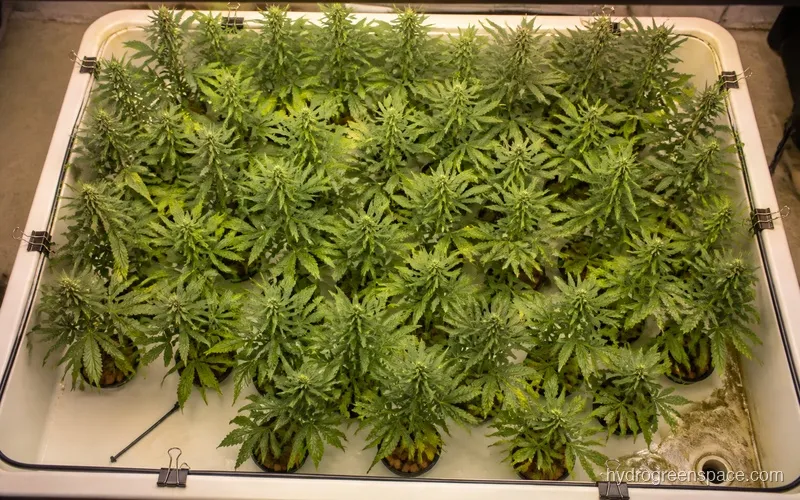
This is the number that defines the sea of green method: roughly 1 plant per square foot of canopy space. In a 4x4 tent, that’s 16 plants. In a 3x3, that’s 9. You’re not trying to grow large plants. You’re trying to cover every square foot of your canopy with a cola.
Spacing tighter than 1 per sq ft increases the risk of airflow problems and mold. Spacing looser wastes light and space. One per square foot is the sweet spot that the technique has converged on over decades of grower experience.
Warning: SOG plants should be uniform in height. If some are stretching taller than others, they’ll shade their neighbors and you’ll lose yield on the lagging plants.
No Topping: Just One Cola Per Plant
This is where SOG and SCROG diverge completely. The SCROG method in hydroponics relies on topping, LST, and filling a screen with multiple bud sites from fewer plants. SOG does the opposite: you grow a lot of plants, you never top them, and you let each one develop a single dominant cola.
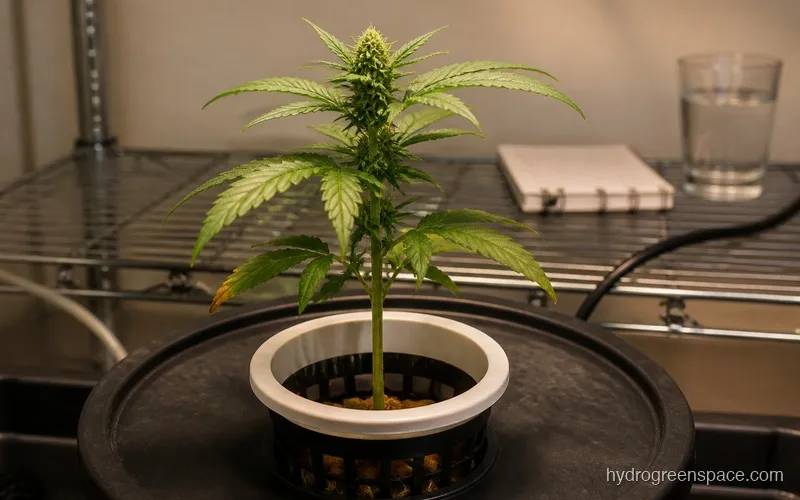
The logic is that a single untopped plant puts all of its energy into that main cola. Multiply that across 16 plants in a 4x4 and you fill your canopy with 16 dense, uniform tops instead of trying to coax 16 bud sites out of 4 heavily trained plants. The harvest timing is also more predictable because all your plants are at the same stage.
Pruning and training your hydroponic plants covers the mechanics of working with small plants like these if you haven’t done it before.
The Flip Trigger
You flip to 12/12 when your plants have filled their allotted space, typically 10-15 inches tall in a hydro SOG setup. In a standard 4x4 tent, you want to flip before plants exceed this height because they’ll stretch another 50-100% during the first 2-3 weeks of flower. If you flip too late, you’ll run out of vertical space before the plants finish.
The flip is also the moment to strip the lower canopy if you haven’t already. Anything below the top 4-6 inches of the plant is unlikely to develop into quality flower under your light. Removing it concentrates the plant’s resources upward.
After the flip, dial in your nutrient profile. The plant’s demand for phosphorus and potassium increases significantly in flower, while nitrogen needs drop. Check your EC levels every few days early in flower. Stretching plants are drinking more water and nutrients than they were in veg, and reservoirs can deplete faster than you expect.
Tip: Run your EC slightly higher in early flower (week 1-3) to support the stretch, then dial it back slightly in mid-to-late flower as the plant’s uptake slows. Chasing a stable reservoir rather than a perfect static number will serve you better.
SOG vs SCROG: Which Should You Choose?
The choice comes down to your plant count, legal situation (in many jurisdictions, plant count limits matter), and how much training work you want to do.
| Factor | SOG | SCROG |
|---|---|---|
| Plants per sq ft | ~1 | ~1 per 4 sq ft |
| Training required | None (lollipopping optional) | Topping + LST + screen management |
| Cycle speed | Faster (shorter veg) | Slower (longer veg to fill screen) |
| Best hydro system | Ebb and flow, DWC | DWC, RDWC |
| Harvest uniformity | High (uniform plant size) | Moderate (depends on fill) |
If plant count isn’t a constraint, SOG wins on cycle speed. If you’re limited to fewer plants and want to maximize yield from each one, SCROG is the better fit. You can read a full breakdown in the SCROG method guide.
Dialing In Your Environment for Multiple Harvest Cycles
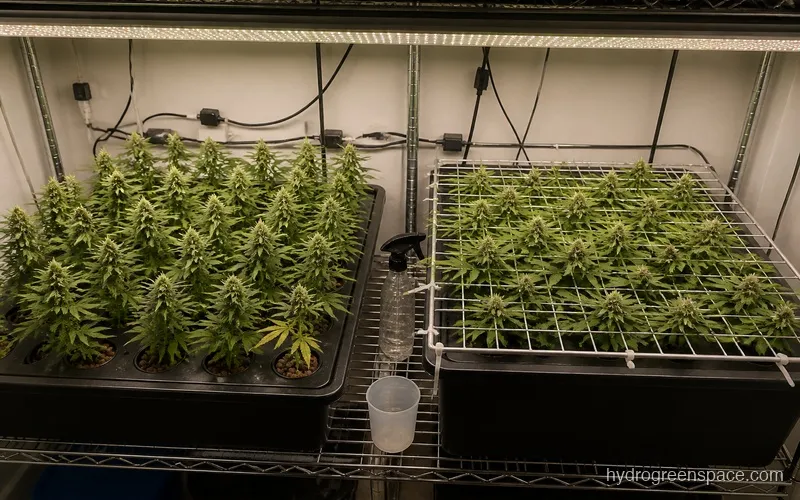
The real payoff of SOG isn’t the first harvest. It’s the rhythm you build after. With a 2-week veg and an 8-week flower cycle, you’re looking at roughly 5 harvests per year from the same space. To hit that cadence, you need your environment as consistent as your plant count.
Your grow tent setup needs to handle the increased humidity that comes with a packed canopy. SOG plants are closer together than in other methods, which means less airflow between them. A well-positioned oscillating fan and a correctly sized inline fan are not optional. They’re what keep mold from ending your run in week 5.
Light coverage matters more in SOG than almost any other method because every plant is roughly the same height. A uniform light footprint means a uniform canopy. If your light has hot spots or dead zones, they’ll show up immediately in your harvest weight.
For your first harvest, knowing what to expect takes some of the guesswork out of the process. SOG plants finish more uniformly than heavily trained plants, which makes the call on harvest timing a little more straightforward.
Once you’ve run a few cycles and want to squeeze more out of your setup, maximizing your yields and optimizing your light cycle are the two levers with the most upside at this stage.
The first time a packed SOG canopy comes down all at once, it makes the 2-week veg feel like the bargain it is. SOG fits into a broader playbook of advanced hydroponic techniques for growers focused on maximizing output per cycle.