
Companion Planting Hydroponics: What Actually Works
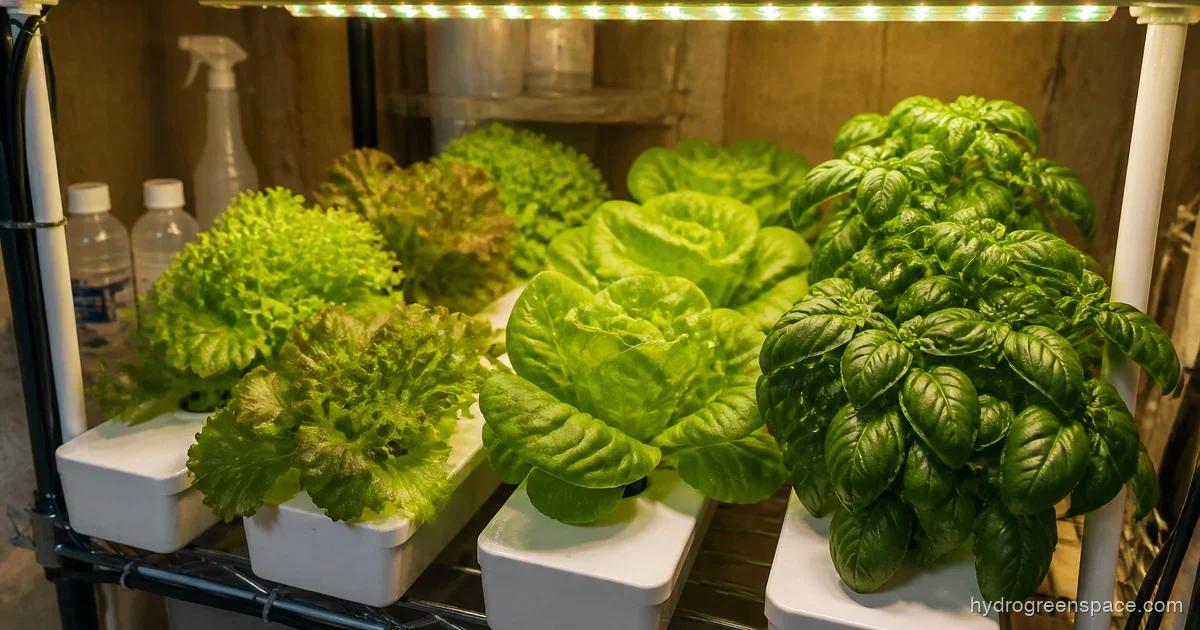
Most of what you’ve read about companion planting doesn’t apply to hydroponics. Nitrogen-fixing beans, pest-repelling marigolds, the classic “three sisters” setup: those strategies depend on soil biology, open-air pest pressure, and microbial relationships that simply don’t exist in a controlled indoor system. That doesn’t mean companion planting in hydroponics is useless. It just means the rules are completely different.
Here’s what actually matters when you’re growing multiple plants in the same hydroponic system, and how to pair them so your setup runs better rather than worse.
Why Traditional Companion Planting Mostly Doesn’t Transfer
In soil gardening, companion planting works through three mechanisms: root exudates that repel pests, nitrogen fixation by legumes, and allelopathic chemicals that suppress weeds. In a hydroponic system, all three break down.
Pest repellent compounds from basil or marigolds don’t diffuse through a nutrient solution the way they do through soil. Nitrogen-fixing bacteria need soil particles and specific root attachments to function. And since you’re not growing in soil at all, weed suppression is irrelevant.
What you do get in a controlled indoor grow is something more useful: total environmental control. You choose who shares the reservoir, who gets what light, and how long each crop stays in. The companion planting question in hydroponics isn’t “what repels aphids near my tomatoes.” It’s “which plants can share water, nutrients, and light without competing against each other.”
The Three Things That Actually Matter When Mixing Plants
Nutrient EC and pH Range
This is the biggest compatibility factor most growers ignore. Every plant has a preferred EC (electrical conductivity) range and pH window. If you’re pairing a heavy feeder like tomatoes (EC 2.0–3.5) with lettuce (EC 0.8–1.6), one of them is always running at the wrong concentration.
For genuinely compatible pairings, you want plants with overlapping EC ranges. Herbs and leafy greens (EC 1.2–2.0, pH 5.5–6.5) tend to overlap well. Fruiting crops and leafy greens typically don’t, and forcing them to share a reservoir means you’re either overfeeding your lettuce or starving your peppers.
Light Requirements Per Plant
Tall plants block light from low-growing ones. This can work in your favor (shade-tolerant herbs under a taller crop) or against you (a sprawling tomato shading out the basil you planted right next to it). If you’re growing in a shared space, vertical planning matters more than plant selection.
Low-light-tolerant plants like mint, cilantro, and some lettuces can actually benefit from being positioned under a taller canopy. High-light-demand crops like tomatoes and basil need direct exposure and shouldn’t be shaded. Understanding how to train plants to share vertical space is more important here than any “companion pairing” chart.
Growth Rate Compatibility
Fast-finishing crops (lettuce, spinach, radishes: 30–45 days) and slow-growing crops (tomatoes, peppers: 70–90+ days) have completely different system life cycles. Mixing them without a plan just means your fast crops finish and rot in the reservoir while your slow crops are still maturing.
The fix isn’t to avoid mixing them. Plan for staggered harvests instead. Plant your fast crops knowing you’ll pull them and replace them before the slow crops finish. This “harvest timing” approach is one of the most underused strategies for maximizing system utilization.
Good and Bad Plant Pairings by System Type
Not all hydroponic systems handle multi-crop growing equally. Here’s what works where:
DWC (Deep Water Culture)
DWC is a shared-reservoir system, which means nutrient competition is direct and immediate. Your best pairings here are plants with nearly identical EC and pH needs.
Works well:
- Lettuce + spinach + kale (all leafy, similar EC 1.2–2.0)
- Basil + cilantro + parsley (herbs, similar EC 1.0–1.6)
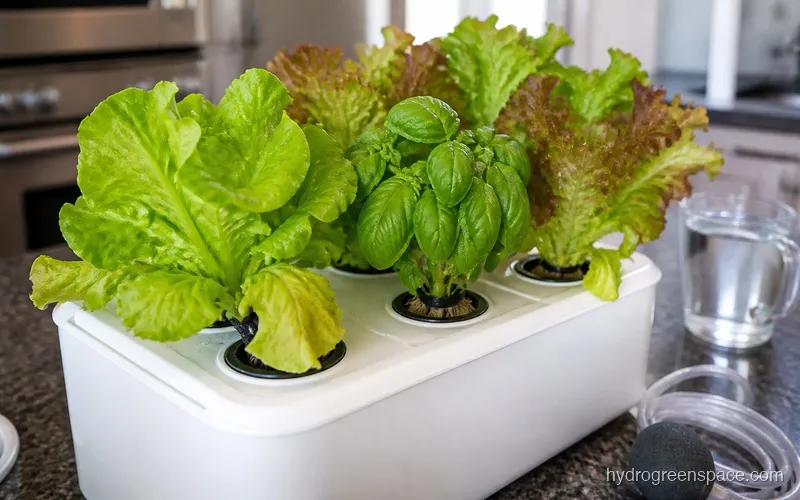
- Multiple lettuce varieties in the same tank
Avoid:
- Tomatoes + anything else
- Strawberries + herbs (strawberries prefer higher EC and lower pH than most herbs)
- Mint + other herbs (mint is allelopathic and will release growth-inhibiting compounds even in water)
NFT (Nutrient Film Technique)
NFT channels give you more flexibility because you can run separate channels with different nutrient concentrations if your system allows it. Within the same channel, the same EC rules apply.
Works well:
- Fast lettuce varieties in dedicated channels alongside slower herbs
- Strawberries in their own dedicated channel next to leafy greens
Kratky (Passive, No Pump)
Kratky jars are essentially individual reservoirs, so you can customize each one. Mixing plants in the same Kratky container is almost never worth it, as root systems compete aggressively in the small volume. Use separate jars and treat the “companion” aspect as spatial placement rather than resource sharing.
Vertical / Tower Systems
Towers naturally layer plants by height, making them one of the better systems for genuine mixed-crop growing. Shade-tolerant varieties go at the bottom, full-sun crops at the top. Strawberries, lettuce, and herbs often coexist well in towers because each plant has its own pocket.
The Harvest Timing Strategy
This is where companion planting in hydroponics gets genuinely interesting. Instead of thinking about which plants “help” each other biologically, think about which plants fill your system efficiently across time.
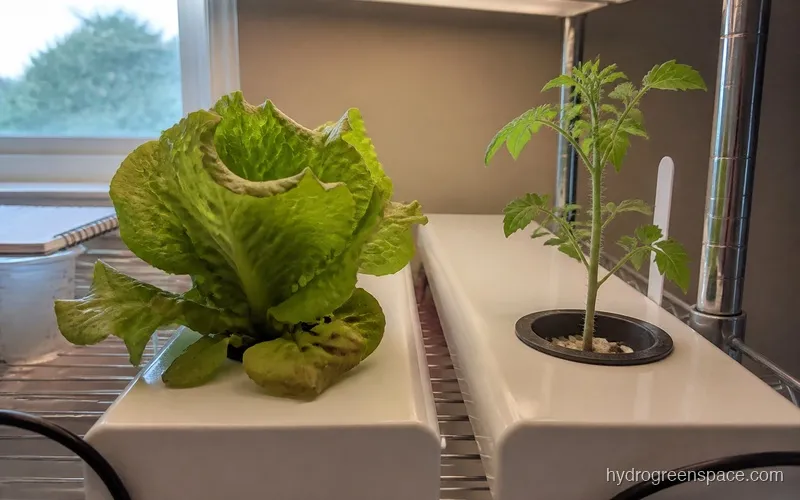
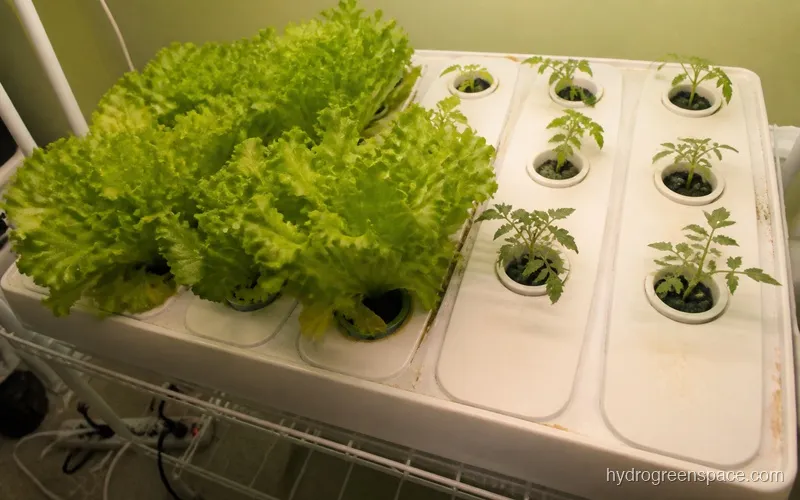
The approach: plant fast-finishing crops (lettuce, radishes, baby spinach) in the same system as your slow-growing anchor crop (tomatoes, peppers). The fast crops occupy empty net pot slots, produce a harvest in 4–6 weeks, and get pulled before the anchor crop needs the root zone space.
This works especially well in larger NFT or flood-and-drain setups where you have more channels or tray space than your main crop requires at first. You’re not just growing companions; you’re running a continuous harvest cycle. Understanding crop rotation between grows builds directly on this timing approach.
Plants That Should Not Share a System
Beyond the fruiting-vs-leafy issue, a few specific combinations cause consistent problems:
Mint with anything: Mint produces compounds that suppress nearby plant growth even in a water-based system. It’s also invasive with its root system. Always grow mint in its own container.
Fennel with most vegetables: Fennel is allelopathic in soil and there’s evidence it inhibits some plants even in hydroponic conditions. It’s not worth the risk. Grow it separately.
Cucumber with tomatoes: Both are heavy fruiting crops with similar-looking needs, but cucumbers prefer slightly different calcium ratios and are more sensitive to temperature swings. In practice they stress each other when sharing a reservoir.
Plants with vastly different pH needs: Blueberries (optimal pH 4.5–5.5) can’t share a reservoir with basil (optimal pH 5.5–6.5). The pH window that satisfies one will actively harm the other.
What I’d do: When in doubt, grow plants in separate reservoirs and just share the same grow space. Physical proximity (for shared lighting, CO2, and airflow) gives you most of the space-efficiency benefits of companion planting without the nutrient conflict. If you’re managing CO2 levels in a mixed-crop setup, all your plants benefit equally from supplementation without any shared-water risk.
Does Indoor Companion Planting Actually Help With Pests?
Somewhat, but not in the way most people expect. You’re not getting the biological pest protection that works in an outdoor garden. What you do get is reduced monoculture density, which naturally limits how fast an infestation can spread. A system with three different crop types is harder for a single pest to dominate than 50 identical lettuce plants.
For actual pest management, the pairing of plants won’t replace a real prevention and response protocol. Sticky traps, HEPA intake filters, and isolation practices matter far more than plant selection for managing pests in a hydroponic system.
A Simple Framework for Pairing Plants
Before you mix anything in a shared system, run through this checklist:
- EC overlap: Do both plants thrive in the same EC range? (Check a nutrient guide for both.)
- pH overlap: Is there a 0.5-unit window where both plants are happy?
- Light needs: Can you position them so neither blocks the other?
- Growth rate: Do you have a plan for when the fast plant finishes?
- Root zone: In a shared reservoir, will the root systems have room to expand without crowding?
If you answer yes to all five, the pairing is worth trying. If you answer no to the first two, don’t share a reservoir. Share a space instead.
System-Type Quick Reference
| System | Companion Planting Feasibility | Best Approach |
|---|---|---|
| DWC | Medium | Match EC/pH strictly, leafy greens only |
| NFT | High | Separate channels for different crops |
| Kratky | Low | Separate jars, share space not solution |
| Flood & Drain | Medium | Group by EC needs, stagger timing |
| Tower | High | Layer by light need (sun-lovers at top) |
| RDWC | Low | Shared reservoir limits plant variety |
Compatible Pairs Worth Trying
| Plant A | Plant B | Why It Works |
|---|---|---|
| Lettuce | Spinach | Nearly identical EC, pH, and light needs |
| Basil | Cilantro | Similar EC range, short growth cycles |
| Kale | Swiss Chard | Same leafy-green nutrient window |
| Lettuce | Radishes | Fast finisher fills space while lettuce matures |
| Strawberries | Herbs | Similar EC tolerance in tower or separate NFT channels |
If you’re running a larger system and want to explore more structured canopy management, the SCROG method is worth understanding for how it helps when multiple plant types are fighting for the same light footprint.
The real unlock with companion planting in hydroponics isn’t about finding magical pairings that boost each other’s growth. It’s about designing your system so every slot stays productive, every harvest cycle feeds into the next, and nothing in your reservoir is working against anything else. Start with compatible nutrient needs, plan your harvest timing, and let the system do the rest. For growers ready to stack companion planting with other methods, the advanced hydroponic techniques guide covers how these strategies work together in a mature system.