
SCROG Method in Hydroponics: Setup & Training Guide
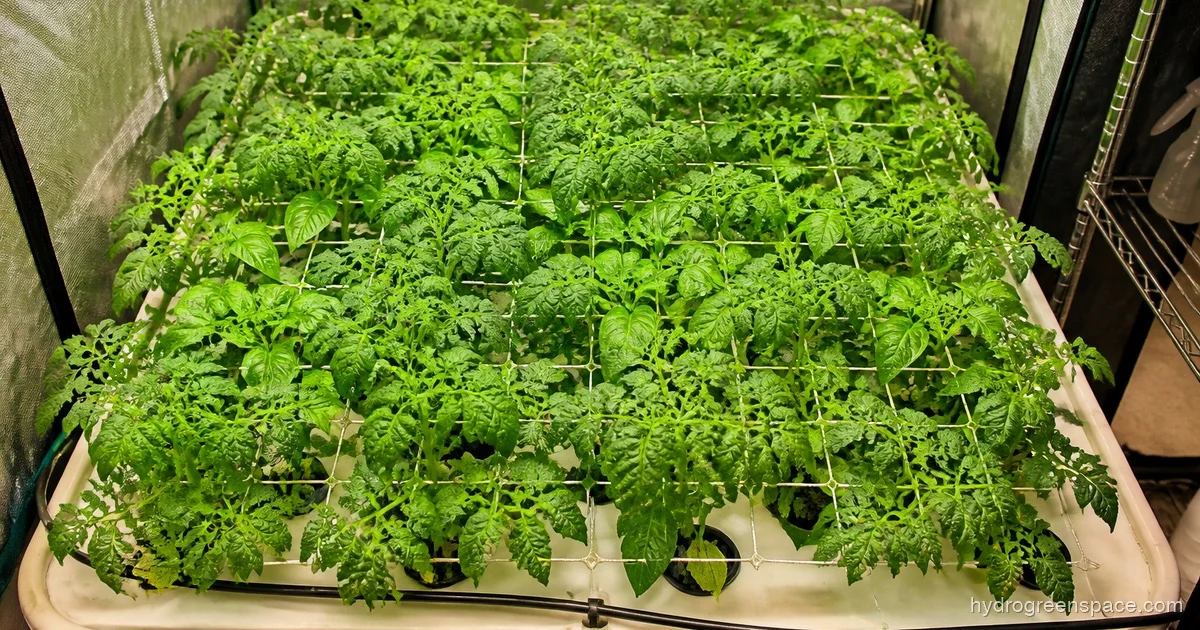
If you’ve been running a hydroponic system for a grow or two and you’re not seeing the yields you expected, the problem is usually light, not nutrients. Most of your canopy is getting lit from the top, while lower branches are barely touched. The SCROG method fixes that, and it works better in hydroponics than almost anywhere else because hydro plants grow fast enough to fill a screen in weeks rather than months.
Here’s how to set it up properly, how to maintain your reservoir without destroying the canopy you’ve built, and when to stop training and let the plants push into flower.
Why the SCROG Method Works So Well in Hydroponics
SCROG stands for Screen of Green. You stretch a horizontal net or mesh screen above your plants and weave branches through it as they grow, forcing lateral branching and spreading the canopy flat across the screen. When done right, every branch tip is at the same height, receiving the same light intensity. You go from a handful of main colas to dozens of even bud sites.
The reason screen of green hydroponics outperforms soil is growth rate. A tomato or pepper plant in a DWC system can push 2-3 inches of new growth per day during peak veg. That same plant in soil might do half that. You’re filling your screen faster, flipping to flower sooner, and cycling through harvests more quickly. For indeterminate crops like tomatoes and cucumbers, continuous training through a screen dramatically increases production in a fixed footprint.
This works with tomatoes, peppers, cucumbers, herbs, and any vining or bushy plant that responds to topping and lateral training. You’re not locked into one crop type, and you’re not locked into one hydroponic system either, though some systems are more SCROG-friendly than others (more on that shortly).
What You Need to Build a SCROG Net Setup
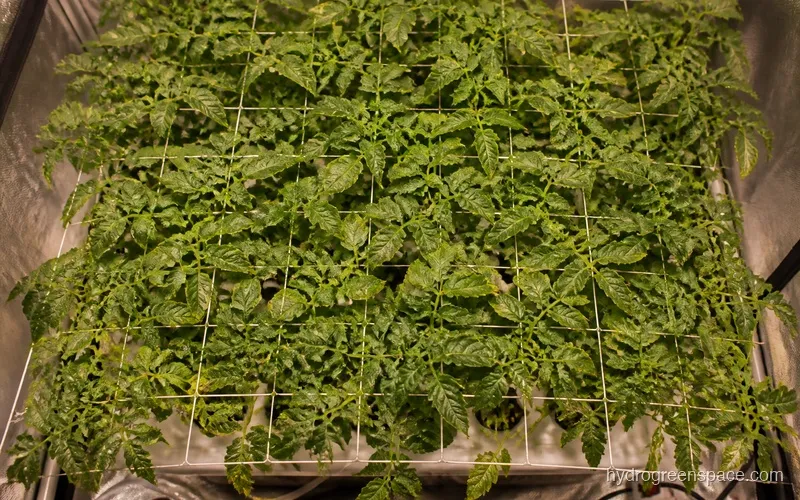
The net itself is simple. You want a mesh with 2-inch (5 cm) to 4-inch (10 cm) squares. Smaller than that and you’ll fight the net every time you tuck a branch. Larger and you lose the control that makes SCROG worth it. Garden netting, plastic trellis netting, or even paracord woven through a PVC frame all work. The material matters less than the rigidity, because a net that sags when loaded with plants is useless.
Frame options:
- Grow tent frame rails: clip or tie the net directly to the tent’s horizontal support bars. This is the cleanest solution if you’re already growing in a tent.
- Freestanding PVC frame: glue together a simple rectangle from 3/4-inch PVC pipe. Attach legs that sit outside your reservoir or sit on the table surface beside the system. Height is adjustable if you use slip fittings instead of glued joints.
- Wooden dowel frame: cheap, light, and fine for a single grow. PVC or metal is more durable for repeated use.
Net height above plants: Start with the net 8-12 inches above the tops of your plants when you install it. As the plants grow into it, you want the lowest foliage at least 6 inches below the screen so you have room to tuck. If the screen is too low, you’re fighting the plants constantly. Too high and you lose weeks of potential training.
How to Train Plants Into the SCROG Net Step by Step
Step 1: Top early. Before the screen is even installed, top your plants once at node 3 or 4 to trigger lateral branching. This is where you’re creating the branches you’ll train across the screen. Without topping, you get one dominant central stem and very little to work with. If you want to combine propagation with SCROG, starting from clones rather than seeds gives you a uniform canopy height from day one. Learn how to take cuttings properly in the cloning and propagation guide
Step 2: Install the net once plants are 6-8 inches tall. Don’t wait until they’ve already hit the intended screen height. You want the net in place while there’s still room to tuck and train the first branches.
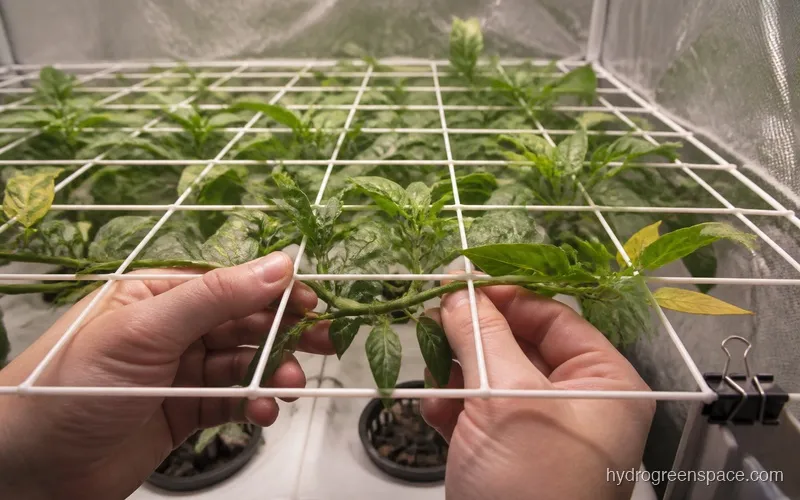
Step 3: Tuck, don’t force. As branches reach the screen, weave them horizontally through the mesh. The goal is to fill empty squares rather than stack growth directly upward. Gently guide each branch tip to an open square and secure it under the netting. Check every 1-2 days during active veg, sometimes more if your plants are in a fast system.
Step 4: Keep tucking until the screen is 60-70% full. This is the number most growers skip. A lot of growers flip to flower too early because the screen looks full from above. Wait until 60-70% of your screen squares have a branch tip in them. Below that and you’re leaving yield on the table. Above 80% and the plants become difficult to manage during the stretch phase after flip.
Step 5: Stop tucking when you flip. Once you switch to a 12/12 light cycle (for photoperiod crops) or trigger flowering in other ways, stop weaving. The plant needs to push that energy upward now. The branches you’ve trained will stretch through the screen and each tip becomes a flowering site. For more on managing the transition, the light cycle optimization guide covers photoperiod timing in depth.
Scrog With Different Hydroponic Systems
Not every hydro setup handles SCROG the same way. Here’s where each system stands:
DWC (Deep Water Culture): The best pairing for SCROG. Plants grow fast, roots develop without restriction, and the reservoir sits below the net entirely. The challenge is reservoir maintenance once the canopy fills. Changing nutrients, checking pH, and managing root health all have to happen from below or by temporarily lifting the net assembly. If you’re running a full 4x4 screen over a DWC tote, factor in access points at the design stage. A net frame that lifts off the reservoir without disturbing the plant roots saves a huge headache later. For a full DWC build walkthrough, the DIY DWC system guide covers the reservoir setup in detail.
NFT (Nutrient Film Technique): Compatible, but with a catch. NFT channels run in one direction, and a large flat canopy can make it difficult to reach the pump, inlet, or outlet connections. Keep the SCROG frame oriented so it doesn’t block the ends of the channels. Channel access matters more in NFT than in any other system.
Kratky: Yes, SCROG works in Kratky, particularly for larger plants like tomatoes or peppers in 5-gallon containers. The limitation is that you can’t top off the reservoir without lifting the net assembly, and Kratky plants run to near-dry before the next reservoir fill. Plan your refill schedule around those windows. The hydroponic systems overview has a comparison of Kratky and DWC access tradeoffs worth reading before you commit to a system.
Ebb and flow / flood and drain: Highly compatible. The flood table sits below the net, and all the plumbing is underneath. You can flood, drain, and maintain everything without touching the canopy at all.
SCROG vs. SOG: Which Should You Use?
Sea of Green (SOG) and Screen of Green are often confused because the names are similar and both maximize canopy coverage. They’re fundamentally different approaches. For a full breakdown of the SOG side of the comparison, the SOG method guide walks through plant count, spacing, and cycle length.
| SCROG | SOG | |
|---|---|---|
| Plant count | Few plants, trained wide | Many plants, small footprint each |
| Training required | Yes (topping, tucking) | Minimal (no training, just density) |
| Veg time | Longer (training takes time) | Shorter (flip early, flip often) |
| Yield per plant | Very high | Lower per plant, higher per square foot |
| Best for | Indeterminate crops, single strains | Fast-cycling crops, multiple strains |
| Reservoir access | Harder once canopy fills | Easier (fewer large plants blocking access) |
If you’re growing tomatoes or cucumbers that will live in your system for months, SCROG is the right call. If you’re cycling through fast crops like lettuce or herbs, SOG (or simply high-density planting) is faster and simpler. For beginners, SOG has a lower error rate. SCROG rewards growers who are comfortable with basic pruning and don’t mind checking the net daily during peak veg. If you’re still getting comfortable with your system overall, the beginner’s guide to hydroponics covers the foundational concepts before you add training into the mix.
Common SCROG Mistakes and How to Avoid Them
Flipping too early. 60-70% screen fill is the target before you switch to flower. It looks full before it actually is. Trust the percentage, not the visual impression.
Skipping defoliation. Once the screen is full and you’ve flipped, strip the leaves below the net. Anything that can’t reach the light is pulling resources from the tops. Heavy defoliation below the screen is standard and beneficial, not damaging. If you want to understand the broader relationship between pruning and yield, the pruning and training techniques guide covers this in detail.
Not anchoring branches. A branch you’ve tucked through the screen will often try to grow back upward. Clips, soft ties, or even a piece of string looped over the mesh are all you need to keep it horizontal. Check daily the first two weeks.
Ignoring the roots during canopy management. In DWC especially, your root health during the training period is what determines how fast the canopy fills. Clean water, correct pH (5.5-6.5 for most crops), and dissolved oxygen are non-negotiable. The beneficial bacteria guide explains how to keep the root zone healthy through longer veg periods.
Maintaining Your Reservoir Under a Full SCROG Net
This is where DWC growers run into the most trouble. Once your screen is 70% full of trained branches, getting to your reservoir is genuinely awkward.
Practical options:
- Lift-off frame: Design the net frame to detach cleanly from whatever it’s resting on. Two hooks on opposite sides, lift straight up, set the whole thing on a stand. Takes two people on a full 4x4. Worth it.
- Side port reservoir: Drill a fill/drain port into the side of your tote near the bottom. You can pump out old nutrient solution and add fresh water without moving anything.
- Continuous top-off system: A simple float valve connected to a fresh water reservoir keeps the level stable between full nutrient changes. You still have to do full swaps, but less frequently.
- Measure first: Keep a dedicated long-reach pH pen and EC meter. You should be testing levels without touching the canopy at all during normal monitoring.
The worst thing you can do is avoid checking your reservoir because the canopy is inconvenient. Root rot and pH crashes can take a DWC system from healthy to destroyed in 48-72 hours. Build access in from the start, not as an afterthought.
Once you’ve got one SCROG grow dialed in and you’re comfortable with the maintenance rhythm, the technique becomes second nature. The extra setup time in veg pays off in a harvest that genuinely looks different from anything you’ve grown before. If you want to push yields even further after mastering the canopy, the increasing yields guide is the natural next step. SCROG is one of the most effective canopy management methods covered in the advanced hydroponic techniques guide.