
When to Change Hydroponic Nutrients (Full Guide)
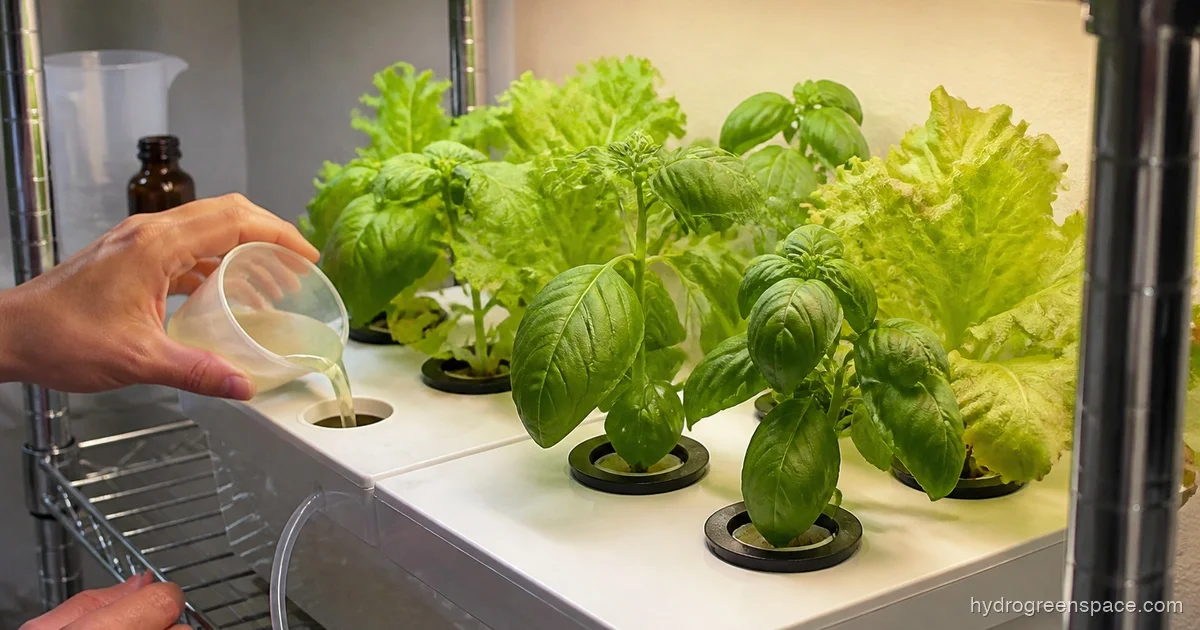
Most growers start changing their nutrient solution on a rigid schedule and wonder why their plants still look off. The real answer isn’t a fixed number of days. It’s knowing what to watch for and understanding when a top-off is enough versus when you need a full flush and reset.
Here’s how to actually make that call.
What’s Actually Happening to Your Nutrient Solution Over Time
Your nutrient solution isn’t static. From the moment you mix it, a few things start happening simultaneously: plants absorb specific nutrients faster than others, water evaporates (concentrating what’s left), and dissolved salts begin accumulating on reservoir walls and root surfaces.
The result is a solution that drifts. EC climbs as water volume drops and salts concentrate. pH swings become less predictable. The ratio of nutrients shifts because nitrogen gets pulled at a different rate than calcium or iron. After enough time, you’re not feeding plants a balanced solution. You’re feeding them whatever the plants didn’t want from the last batch.
This is how nutrient lockout starts. Not from a single mixing mistake, but from gradual drift you didn’t catch until the plant was already showing symptoms.
Keeping an eye on your EC and PPM levels is your first line of defense here. When EC climbs above your target range and adding plain water doesn’t bring it back down within a day, that’s a strong signal the reservoir needs more than a top-off.
Top-Off vs Full Change: The Core Decision
Here’s the concrete breakdown.
Top off when:
- Reservoir volume has dropped but EC is still in range
- Plants are in a stable growth phase with steady uptake
- pH is drifting but corrects easily with small adjustments
- It’s been less than 7 days since your last full change
Do a full reservoir change when:
- EC is significantly above your target even after adding plain water
- You see visible biofilm, slime, or unusual cloudiness (see cloudy water in hydroponics)
- Roots show early signs of root rot or smell off
- It’s been 7–14 days since the last change (depending on system and stage)
- You’re transitioning between growth stages (seedling to veg, veg to flower)
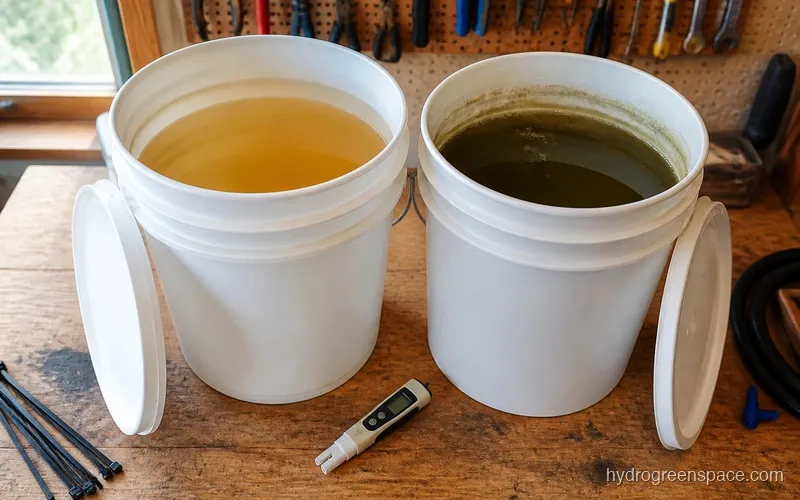
Topping off with plain water when EC is high is the correct move (you’re replacing evaporated water without adding more nutrient salt on top of what’s already concentrated). But topping off when the solution is old, imbalanced, or biologically compromised just delays the inevitable and stresses your plants in the meantime.
What I’d do: I keep a small notebook next to my reservoir and log the date of every full change and every top-off. After a few grows, patterns emerge. You’ll know your system’s evaporation rate, your plants’ uptake rhythm, and how fast salt accumulates in your specific setup. That log is worth more than any generic schedule.
Change Frequency by Growth Stage
Change frequency by growth stage matters more than most growers realize.
| Growth Stage | Recommended Change Interval | Notes |
|---|---|---|
| Seedling / Clone | Every 5–7 days | Roots are small, uptake is low, contamination risk is higher |
| Early Vegetative | Every 7 days | Uptake picks up; watch EC and top off as needed |
| Peak Vegetative | Every 7–10 days | High water demand; top off frequently, full change weekly |
| Transition (veg to flower) | Full change at transition | Different NPK ratios needed; don’t carry over old veg solution |
| Flowering / Fruiting | Every 7–10 days | Monitor closely; P and K uptake increases significantly |
| Late Flowering (flush period) | Every 3–5 days or plain water only | Depends on your preferences around flushing before harvest |
One thing worth noting: at transition points, always do a full change even if you’re not at the 7-day mark. Carrying a veg-heavy nutrient solution into flower is one of the common beginner mistakes in hydroponics that quietly hurts yield without obvious symptoms until it’s too late.
For growers following a structured feeding program, cross-reference these intervals against your specific nutrient line’s schedule. The General Hydroponics PPM chart gives you a solid baseline for what your solution should read at each stage.
System-Specific Timing: DWC, NFT, and Kratky
Not all systems are equal when it comes to reservoir management.
DWC (Deep Water Culture)
DWC is the most reservoir-intensive system. Your plant roots are sitting directly in the solution 24/7, which means contamination and drift affect the plant faster than in systems where roots only see nutrient solution briefly.
In a standard DWC setup, plan for a full change every 7 days. During peak veg with large plants, you may need to top off with plain water every 2–3 days to maintain volume and keep EC in range. Reservoir size matters here. A 5-gallon bucket with one large plant will drift faster than a 20-gallon reservoir with the same plant.
NFT (Nutrient Film Technique)
NFT channels expose roots to a thin film of recirculating solution. The reservoir is usually separate and smaller relative to plant canopy. Because the film is thin, any imbalance reaches roots fast. Stick to the 7-day full change schedule and check EC and pH daily during peak growth.
Kratky (Passive Hydroponics)
This is the big exception.
In Kratky, you do NOT do regular full solution changes. The entire system is designed around a single reservoir fill that the plant consumes as it grows. The air gap between the water surface and the net pot is intentional, providing oxygen to the roots as the water level drops.
If you drain and refill the Kratky reservoir mid-grow, you collapse the air gap, potentially drown the root zone, and throw off the plant’s adaptation to the declining solution. The correct Kratky approach is:
- Mix a full-strength solution at the start
- Top off with plain water only if the level drops low enough to expose roots to air
- Do a full change only at the end of the grow, between crops
For a single Kratky lettuce head, you often won’t top off at all, because the plant drinks the whole reservoir before harvest.
Tip: If you’re growing in a large Kratky container (2+ gallons) for a longer crop like basil, a single mid-grow top-off with plain water is fine. Mix your solution at the upper end of the target EC range to account for the depletion that happens as the grow progresses.
Signs Your Nutrient Solution Needs Changing Now
Regardless of schedule, these symptoms mean change it today:
- Unusual smell: healthy nutrient solution has almost no odor. A sulfur, fishy, or sour smell means bacterial activity has taken hold.
- Visible slime or biofilm: often caused by algae or anaerobic bacteria. A full change plus reservoir cleaning is required.
- Stubborn pH swings: if pH is jumping more than 0.5 points overnight even after adjustment, the solution is likely exhausted or contaminated.
- EC won’t stabilize: if EC is climbing despite correct plant load and you’ve already topped off with plain water, the salt accumulation is past the point of correction.
- Plant symptoms that appeared suddenly: rapid onset yellowing, tip burn, or wilting after a period of healthy growth often traces back to a solution that’s drifted.
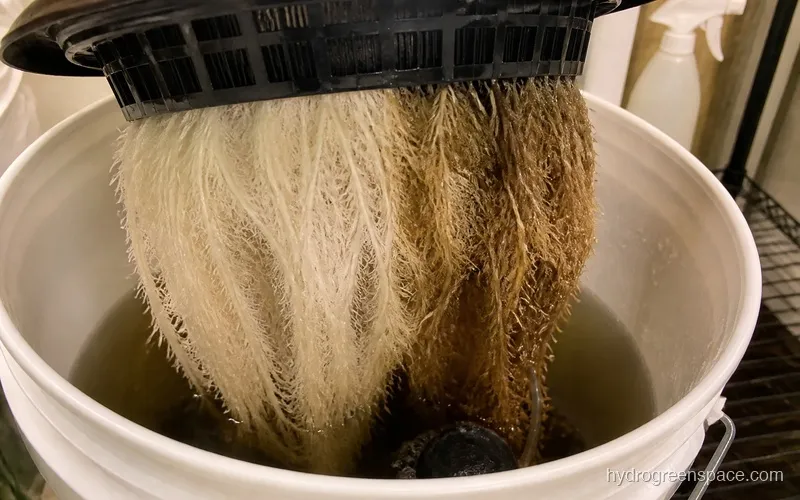
If your plants are showing signs of nutrient burn, check whether your EC has crept above the recommended range for the current stage. That’s often a solution management problem, not a mixing problem.
What to Do With Old Nutrient Solution
What do you do with the solution you drain?
If the solution is not contaminated (no visible slime, no bad smell, EC just drifted high), you can dilute it heavily and water outdoor plants or a garden bed. The residual nutrients are real value, and plants growing in soil won’t experience the lockout effects that matter in a hydroponic reservoir.
Do not pour contaminated solution into a garden without diluting it significantly. Very high EC will damage outdoor plants too.
If the solution smells or shows biofilm, dispose of it down a drain. Don’t reuse it, don’t compost with it undiluted.
How Reservoir Size Affects Your Schedule
A bigger reservoir gives you more buffer. More water volume means nutrients drift more slowly, pH is more stable, and temperature swings are less dramatic (relevant if you’re dealing with reservoir temperature issues).
As a rough guide: a single medium-sized plant in a 5-gallon DWC bucket needs a change every 5–7 days. That same plant in a 15-gallon reservoir can often go 10–14 days between full changes, with top-offs in between.
This is one of the practical arguments for building or buying a slightly larger reservoir than you think you need. The reduced management overhead compounds across an entire grow cycle.
For a complete picture of what a solid reservoir routine looks like day to day, the daily hydroponic maintenance checklist walks through the checks that catch problems before they require an emergency change.
Once you have your change schedule dialed in, the next place most growers find gains is in the how to flush your hydroponic system process. A full flush between grows is as important as the in-grow changes, and the method matters more than most people expect. For a complete overview of how reservoir management fits into your full nutrient strategy, the hydroponic nutrients guide covers the whole picture from nutrient selection to changeout schedules.