
Mycorrhizae in Hydroponics: Do They Actually Work?
Mycorrhizae are one of those topics where you’ll find a lot of enthusiasm online and not a lot of nuance. The short answer is: yes, they can work in hydroponics, but they work differently than they do in soil, and if you add them at the wrong time or to the wrong system setup, you’re wasting your money.
Here’s what you actually need to know before you buy a bag.
Do Mycorrhizae Actually Work in Hydroponics?
The skepticism is fair. Mycorrhizal fungi evolved to extend plant root systems through soil, trading phosphorus and micronutrients for plant sugars. In a conventional nutrient solution, phosphorus is already dissolved and available, so the plant has less incentive to feed the fungi. That’s the honest trade-off.
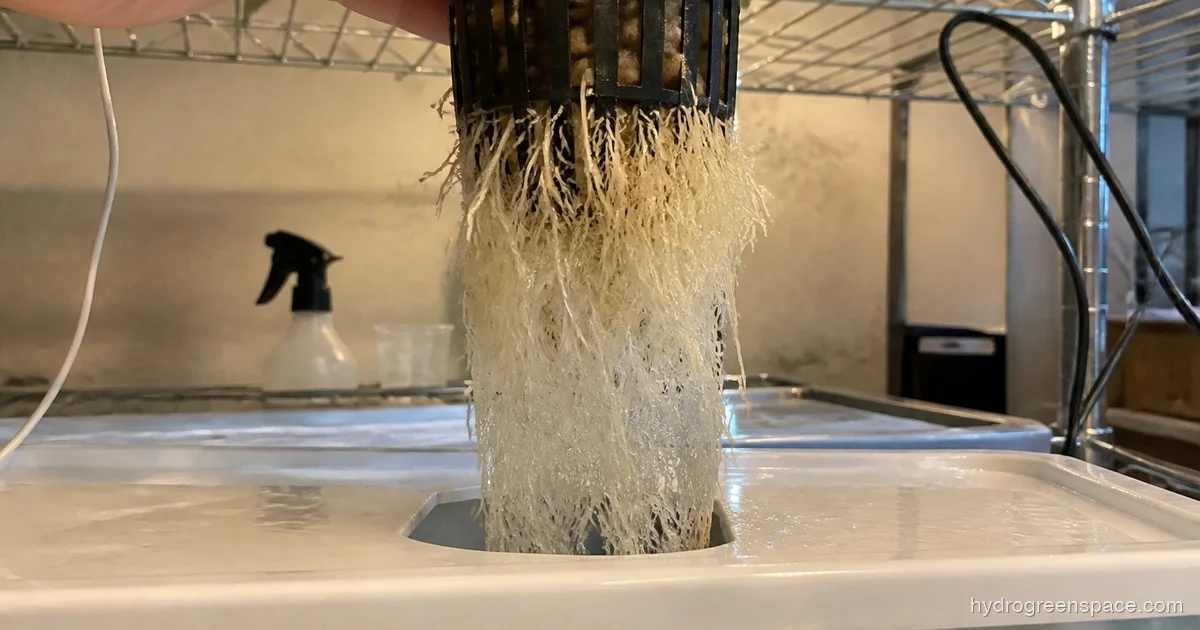
What changes the equation: if your nutrient solution is kept at lower phosphorus concentrations (which many organic-leaning growers do), or if you’re growing in a substrate like rockwool or coco coir where the rhizosphere is more similar to soil, the symbiotic relationship has room to establish. Arbuscular mycorrhizal fungi (AMF) form physical connections to root cells and can still improve water and nutrient uptake efficiency even when baseline nutrient levels are decent.
The research on mycorrhizae in hydroponics is genuinely mixed. Some controlled trials show modest yield increases, especially in transplant recovery speed and root mass. Others show no measurable benefit when high-phosphorus synthetic nutrients are used. So if you’re running a standard General Hydroponics or Masterblend feed at full strength, don’t expect dramatic results. If you’ve dialed back your P levels or you’re running a more organic approach, it’s more likely to pay off.
For a deeper look at building a living root zone, going organic in hydroponics covers this in more depth.
Endo vs. Ecto Mycorrhizae: Which One Do You Need?
Endo mycorrhizae (specifically arbuscular mycorrhizal fungi) colonize inside root cells. They work with the vast majority of food crops, including tomatoes, peppers, cucumbers, lettuce, basil, cannabis, and most herbs and vegetables you’d grow hydroponically.
Ecto mycorrhizae colonize around the outside of root cells and form a sheath. They’re associated with trees, primarily conifers and hardwoods. For almost everything you’re growing in a hydroponic system, ecto is irrelevant.
When you’re shopping, make sure the product contains endo species, particularly Rhizophagus irregularis (formerly Glomus intraradices), which is the most well-researched species for food crops. If a product only lists ecto species or doesn’t specify, it’s likely formulated for ornamentals or trees, not vegetables and herbs.
Which Hydroponic Systems Actually Benefit?
This is where grower experience matters more than the bag instructions.
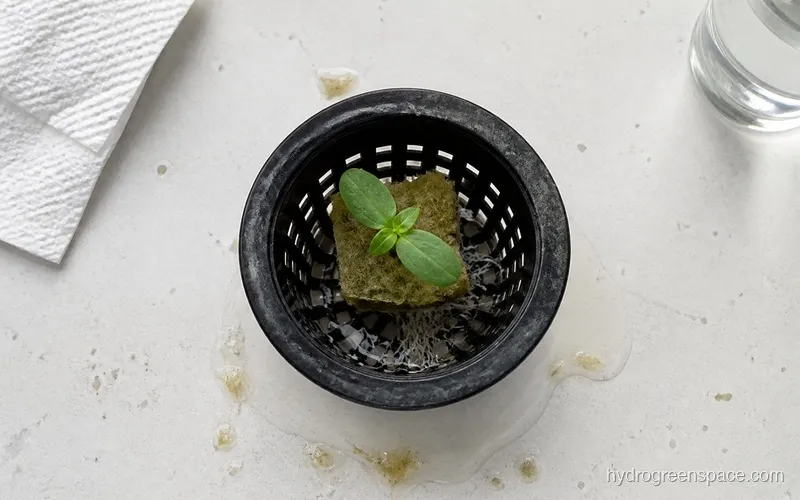
Rockwool and coco coir: These are the two substrates where mycorrhizae consistently perform. The fungi can colonize within the media and maintain contact with roots between watering cycles. If you’re starting seeds or clones in rockwool cubes, inoculating at the seedling stage is easy and effective. This is where I’d start if you’re new to using mycorrhizae.
NFT (Nutrient Film Technique): Marginal at best. The root zone is constantly bathed in solution, which keeps phosphorus available and makes it harder for the mycelial network to establish. Some growers report benefits but it’s harder to maintain the colony.
DWC (Deep Water Culture): The most challenging environment. Roots are submerged, which limits mycelial activity. Mycorrhizae in DWC need to be reapplied at every reservoir change, or you lose the colony. For most DWC growers, beneficial bacteria provides a better return on investment, since bacteria thrive in oxygenated water in a way fungi don’t.
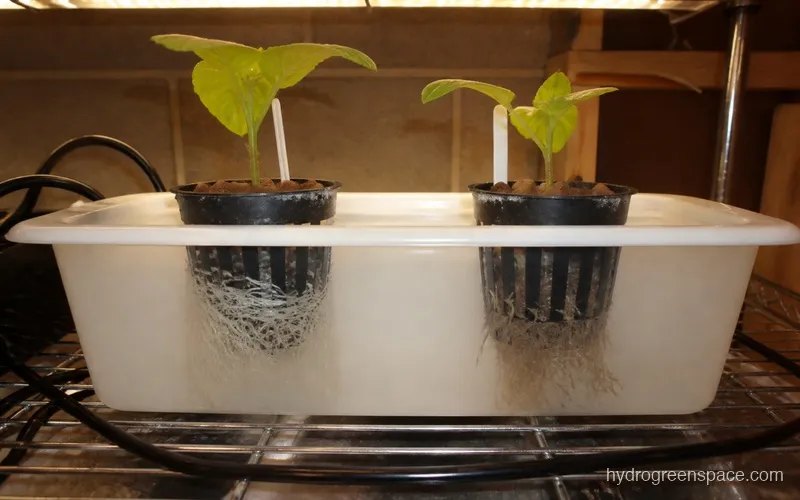
Kratky and other passive systems: Better than DWC, since there’s an air gap and the roots can develop both submerged and aerial zones. Inoculating at transplant can work well here.
What I’d do: If you’re using rockwool or coco, add mycorrhizae at germination or transplant and you’ll likely see better root development within two to three weeks. If you’re running DWC, skip the mycorrhizae and put that money into a quality beneficial bacteria product instead.
Mycorrhizal Fungi and Root Rot: Is There a Connection?
There’s some evidence that a healthy mycorrhizal fungi presence can reduce susceptibility to root pathogens, partly because a thriving rhizosphere leaves less room for opportunistic organisms like Pythium (the main culprit in hydroponic root rot cases).
The mechanism isn’t direct antibiosis, it’s more that a colonized root system tends to have better structural integrity and a more competitive microbial community. Think of it as layered protection rather than a silver bullet. If your water temperature is above 72°F or your system has low dissolved oxygen, mycorrhizae won’t save you from root rot. Address those fundamentals first.
How to Apply Mycorrhizae in a Hydroponic System
Timing is the biggest variable. Mycorrhizae need to make direct contact with root tissue when the roots are actively growing. Applying to an established plant with a mature root system is far less effective than inoculating at the seedling or clone stage.
Step-by-step for rockwool or coco:
- Prepare your seedling cube or plug as normal.
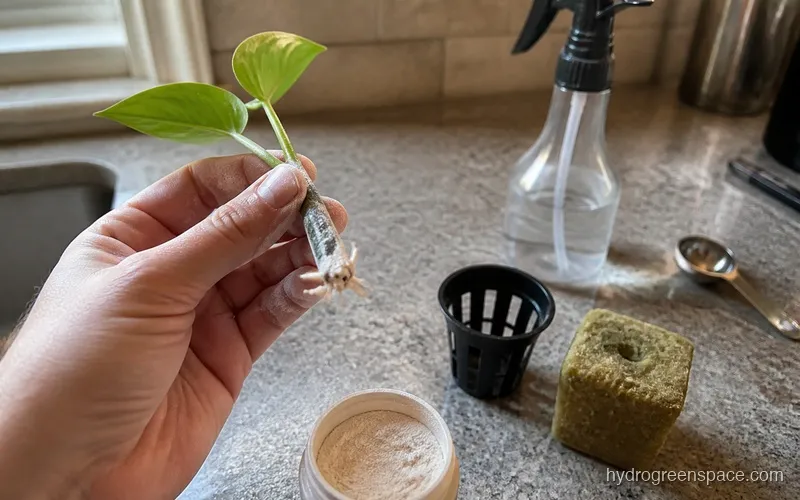
- Dust a small amount of mycorrhizal inoculant powder directly onto the seed or, for clones, onto the base of the cutting before inserting into the plug.
- Keep the humidity high during propagation to give the fungi time to establish before full nutrient feeds begin.
- When transplanting to your main system, you can apply a second light dose to the root zone.
- Once roots are established and growing well, reduce or stop additional inoculant applications.
For a reservoir-based system (DWC, recirculating):
If you want to try it anyway, add the inoculant to your reservoir at every water change. Liquid or water-soluble formulations work better here than powder. Keep phosphorus levels on the lower side (EC closer to 1.0-1.4 for most crops) during the establishment phase.
Warning: Don’t mix mycorrhizal inoculant directly with high-phosphorus nutrients. High phosphorus suppresses AMF colonization. Either use low-P nutrients during the establishment window, or keep P levels dialed back for the first two to three weeks.
Your nutrient approach interacts directly with how well mycorrhizae establish. If you want to take an organic-leaning direction, compost tea for hydroponics and using compost tea as hydroponic nutrients are worth reading alongside this.
Do You Need to Reapply After Every Water Change?
In a true reservoir system: yes, if you want to maintain an active colony. The fungi cells don’t survive indefinitely in standing nutrient solution. For substrate-based systems (rockwool, coco), the colony can persist through multiple waterings as long as you’re not flushing the media hard.
A practical approach is to inoculate at propagation and transplant, then rely on the established root-to-fungi connection to persist through your grow. You’re not trying to keep the water column alive with fungal spores, you’re trying to get colonization in the root tissue itself. Once that happens, reapplication is less critical.
Getting the Most Out of Mycorrhizae
A few things that make a measurable difference:
- Use it early. Propagation stage is the sweet spot. The younger the root system, the faster and more complete the colonization.
- Reduce phosphorus during establishment. Keep P levels lower for the first two to three weeks post-inoculation. You can always bring them back up.
- Pair with beneficial bacteria. Certain bacteria species, especially Bacillus strains, support mycorrhizal colonization. Products that combine both tend to outperform either alone. This overlaps with broader micronutrient strategies for improving root uptake efficiency.
- Don’t sterilize your substrate. Mycorrhizae are living organisms. H2O2 flushes, strong bleach sterilization, or high-chlorine tap water will kill the colony.
- Check your nutrient solution formulation. If your hydroponic nutrient baseline already runs high phosphorus, the fungi have less reason to establish. Consider a seedling-specific formula with lower P for the first few weeks.
Mycorrhizae aren’t a magic fix, but for growers working with substrate-based systems or taking a more biological approach to their root zone, they’re a genuinely useful tool. Once you see a rockwool-grown tomato transplant take off with almost no transplant shock compared to untreated cuttings, you’ll stop second-guessing the investment. If you want to keep building on this, increasing yields in hydroponics covers how the root zone fits into the broader picture of pushing yields, and companion planting in hydroponics gets into some unexpected ways to support root zone health from above ground. Mycorrhizae are part of a broader biological toolkit covered in the advanced hydroponic techniques guide.