
Light Cycle Optimization for Hydroponic Plants
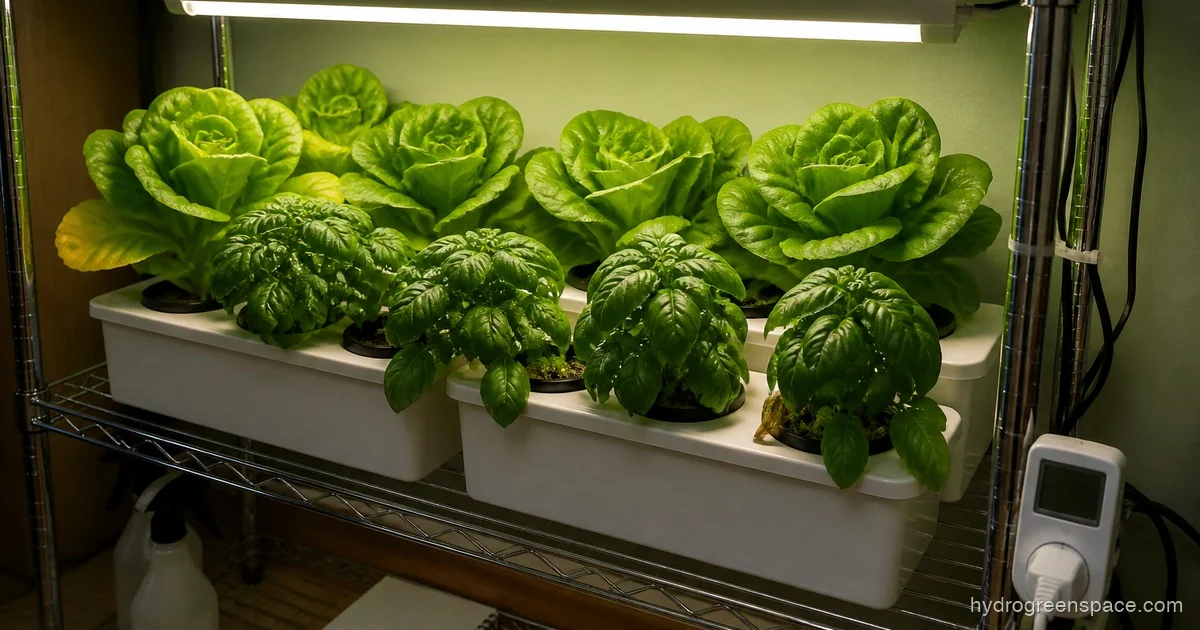
Most growers pick a light schedule the same way they pick a grow medium: they Google it, find someone’s forum post from 2014, and go with it. The problem is those numbers aren’t wrong exactly, but they’re not the whole picture either. Light cycle optimization isn’t just about running your lights for the right number of hours. It’s about understanding what your plants are actually doing in the dark, what happens when you get the hours wrong, and why the same schedule that produces massive basil will frustrate a flowering pepper.
This guide gives you a crop-by-crop reference, the science behind why dark periods matter, and a practical framework for reducing electricity waste without sacrificing yield.
What Plants Are Actually Doing When the Lights Go Off
Plants use darkness to process what they absorbed during the light period, move sugars through the phloem, and regulate their circadian rhythm (an internal clock tied to photoperiod cues that governs everything from root development to flowering triggers).
The two processes most affected by darkness are photoperiodism (the plant’s ability to detect season-length by measuring uninterrupted dark hours) and cellular respiration. During the dark period, plants are actively respiring: consuming oxygen, metabolizing stored carbohydrates, and building root mass. Disrupt that window consistently, even briefly, and you interrupt those hormonal signals.
This is why a grower running 24/0 (lights on all the time) often notices plants that look healthy but stall on yield, develop weird foliage, or simply never trigger flowering. Cannabis, tomatoes, and most flowering crops will either refuse to flower or show stress symptoms like curled leaves and stunted internodes. The only crops that genuinely tolerate continuous light are lettuce, spinach, and a few other leafy greens, and even those often perform better with a short rest. The dark period isn’t downtime. It’s when the plant consolidates its gains.
The Light Schedules That Actually Work, by Crop
There’s no single “best” hydroponic light schedule. What you run depends on crop type, growth stage, and what you’re optimizing for (speed vs. electricity cost vs. yield). Here’s a stage-by-stage breakdown.
Seedlings and Clones
Seedlings and fresh clones under the right light schedule need gentler, longer days. Aim for 18 hours of light at reduced intensity rather than blasting them at full power. The goal is root development, not photosynthesis overload. Eighteen hours gives them enough energy to push roots while the six-hour dark period allows respiration to catch up.
Vegetative Growth
The 18/6 light cycle (18 hours on, 6 hours off) is the standard vegetative light cycle for photoperiod plants, and it’s earned that status. It’s close to a long summer day, which keeps plants in aggressive vegetative growth without the stress of continuous light. For high-intensity crops like tomatoes, peppers, and cucumbers, 16/8 is also effective and saves roughly 10% on electricity without measurable yield loss in most home setups.
For leafy crops like lettuce and spinach, 16/8 works well in veg. Some growers push lettuce to 18/6 to accelerate growth, and it does shorten cycle time by about 5 to 7 days. Whether that’s worth the extra electricity depends on your cost per kWh (something the hydroponic electricity cost calculator can help you work through).
Flowering and Fruiting
This is where light cycle optimization gets critical. Photoperiod plants (cannabis, many tomatoes, strawberries) flower based on uninterrupted dark hours. The standard 12/12 switch triggers flowering because 12 continuous hours of darkness crosses the threshold those plants need to detect “autumn.”
When to switch to 12/12 depends on the crop and system:
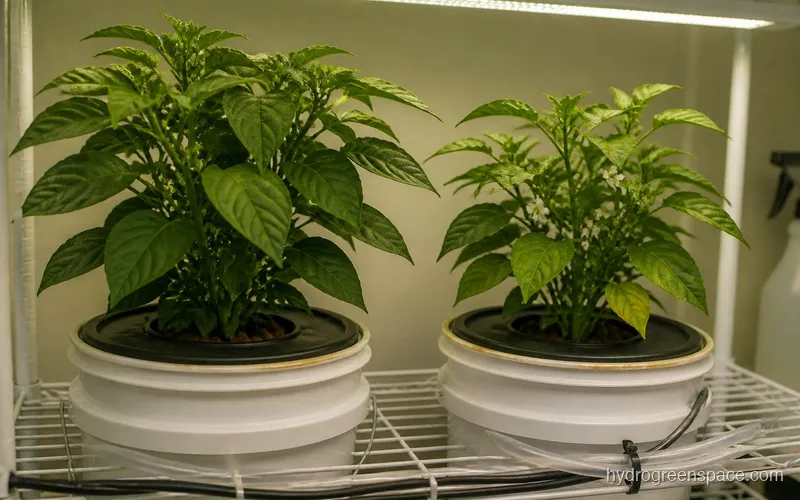
- Tomatoes and peppers: Many commercial varieties are day-neutral, meaning they’ll flower regardless of photoperiod. But for photoperiod tomato varieties, switch to 12/12 once the plant has 5 to 7 true nodes and a solid root system.
- Strawberries: Short-day varieties need 12 hours or less of darkness to initiate flowering. Day-neutral varieties can run 14/10 year-round.
- Cannabis (if legal where you grow): Switch to 12/12 when you’ve reached your target canopy height (typically when the plant is half the desired final height, since it will stretch during early flower).
The key rule: once you’re in 12/12, the dark period must be genuinely dark. A grow light left on a timer that’s off by 30 minutes, a phone screen left in the tent, even a blinking LED on a controller: all of these can interrupt the photoperiod signal. If you’re using a grow tent for light control, check for light leaks before you trigger flower.
Herb and Leafy Green Schedules
Leafy greens are the most forgiving category. Lettuce, basil, arugula, spinach, and kale are all day-neutral and will grow under a wide range of schedules:
| Crop | Recommended Schedule | Notes |
|---|---|---|
| Lettuce | 16/8 or 18/6 | 18/6 reduces days to harvest by ~5 days |
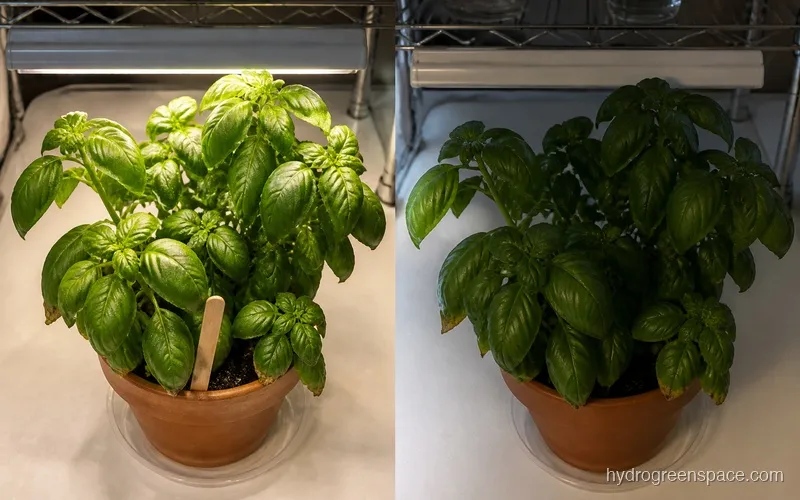
| Basil | 16/8 | Runs 18/6 fine; no benefit past 16 hours |
| Spinach | 14/10 or 16/8 | Long days can trigger bolting |
| Kale | 16/8 | Consistent performer across 14 to 18 hours |
| Cilantro | 12/12 to 14/10 | Long days accelerate bolting; keep it shorter |
What I’d do: For a mixed herb and lettuce setup, I’d standardize on 16/8. It’s long enough to keep everything growing well, short enough to save money, and it gives me flexibility to add a fruiting plant without a major schedule overhaul.
DLI: The Number That Actually Predicts Yield
Hours alone don’t tell the full story. A 600W light running 16 hours in a 4x4 tent delivers very different plant energy than a 100W LED running the same schedule. That’s where DLI (daily light integral) comes in.
DLI measures the total amount of photosynthetically active light a plant receives in a day, expressed in moles per square meter per day (mol/m²/day). It combines both light intensity and duration into one number. Most crops have a target DLI range:
- Leafy greens: 12 to 17 mol/m²/day
- Herbs: 14 to 18 mol/m²/day
- Tomatoes and peppers: 20 to 30 mol/m²/day
- Cannabis (veg): 25 to 35 mol/m²/day
If your plants look stretched and pale even with 18 hours of light, you don’t have a schedule problem. You have an intensity problem. If they look bleached and stressed at 14 hours, your light is too close or too powerful. Calculating your DLI before blaming your schedule saves a lot of wasted troubleshooting. Use the grow light DLI calculator to find your current number and whether your schedule or your intensity needs adjusting.
The light saturation point is also worth knowing: the intensity threshold above which additional light stops increasing photosynthesis. For lettuce, it’s around 250 µmol/m²/s. Pushing past that point doesn’t grow faster lettuce. It just heats the canopy and wastes electricity. Pairing DLI tracking with CO2 supplementation can raise the saturation point for high-demand crops, letting you extract more from longer light schedules.
Automating Your Light Cycle (and Where Growers Get It Wrong)
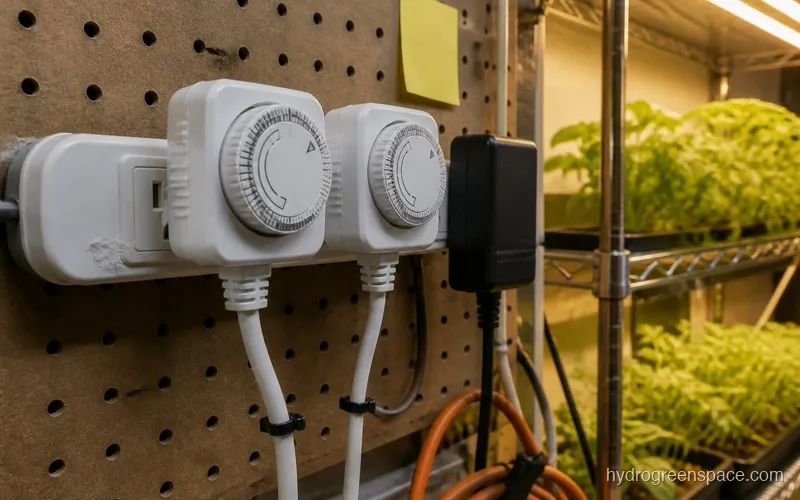
A $15 mechanical timer will run your lights reliably for years. A $30 digital timer gives you better precision and the ability to run split schedules (useful for dual-zone setups). Either works. What doesn’t work is manually switching lights on and off, relying on a smart plug you forget to arm, or running a schedule that drifts by a few minutes each week.
The two most common automation mistakes:
-
Inconsistent dark periods. Plants have a measurable circadian rhythm. A dark period that shifts 30 to 60 minutes day to day won’t prevent flowering, but it does create mild stress that shows up as slightly reduced yield and inconsistent growth rates. Set it and leave it.
-
Single points of failure. If your only light timer fails, your plants either get 24 hours of light or 24 hours of dark. Neither is good mid-cycle. Keep a backup timer on hand, especially if you’re mid-flower.
The indoor hydroponic system with lights guide covers timer wiring and placement for different room configurations if you’re setting up from scratch.
Electricity: What Your Schedule Actually Costs
Light cycles and electricity costs are inseparable if you’re running a grow room seriously. A 600W fixture running 18 hours a day uses 10.8 kWh per day. At $0.15/kWh, that’s $1.62 per day, $49/month, $594/year (per light). Cutting to 16/8 drops it to 9.6 kWh/day, saving about $52/year per fixture with no measurable yield difference for most crops.
If you’re growing using solar power for your system, your schedule optimization shifts from cost to battery capacity (shorter, more intense schedules during peak solar hours often beat longer, lower-intensity schedules that drain storage overnight).
For a full breakdown of what different schedules cost at your electricity rate, the hydroponic electricity cost calculator will run the numbers for any fixture size and schedule combination.
Training Techniques That Pair With Your Schedule
Light cycle optimization doesn’t happen in isolation. The SCROG method works best when you flip to 12/12 immediately after the final net-filling stretch, so the canopy is fully spread before flower energy kicks in. The SOG method typically runs shorter vegetative periods (2 to 3 weeks at 18/6) before flipping, which means your light schedule has a direct impact on how quickly you’re cycling crops through. Pruning and training techniques like topping and LST are also timed around the light schedule. Top during veg while the plant can recover, not in the first two weeks of flower when energy is being redirected.
Once you’ve got your light schedule dialed in, the next lever to pull is nutrient timing. Growth stage and light cycle are closely linked, and your nitrogen demand in veg doesn’t look the same as your phosphorus demand in flower, and aligning your nutrient schedule with your light cycle is one of the cleaner ways to close the gap between “growing well” and “growing at your system’s ceiling.” Light scheduling is covered alongside other compounding methods in the advanced hydroponic techniques guide.